
|
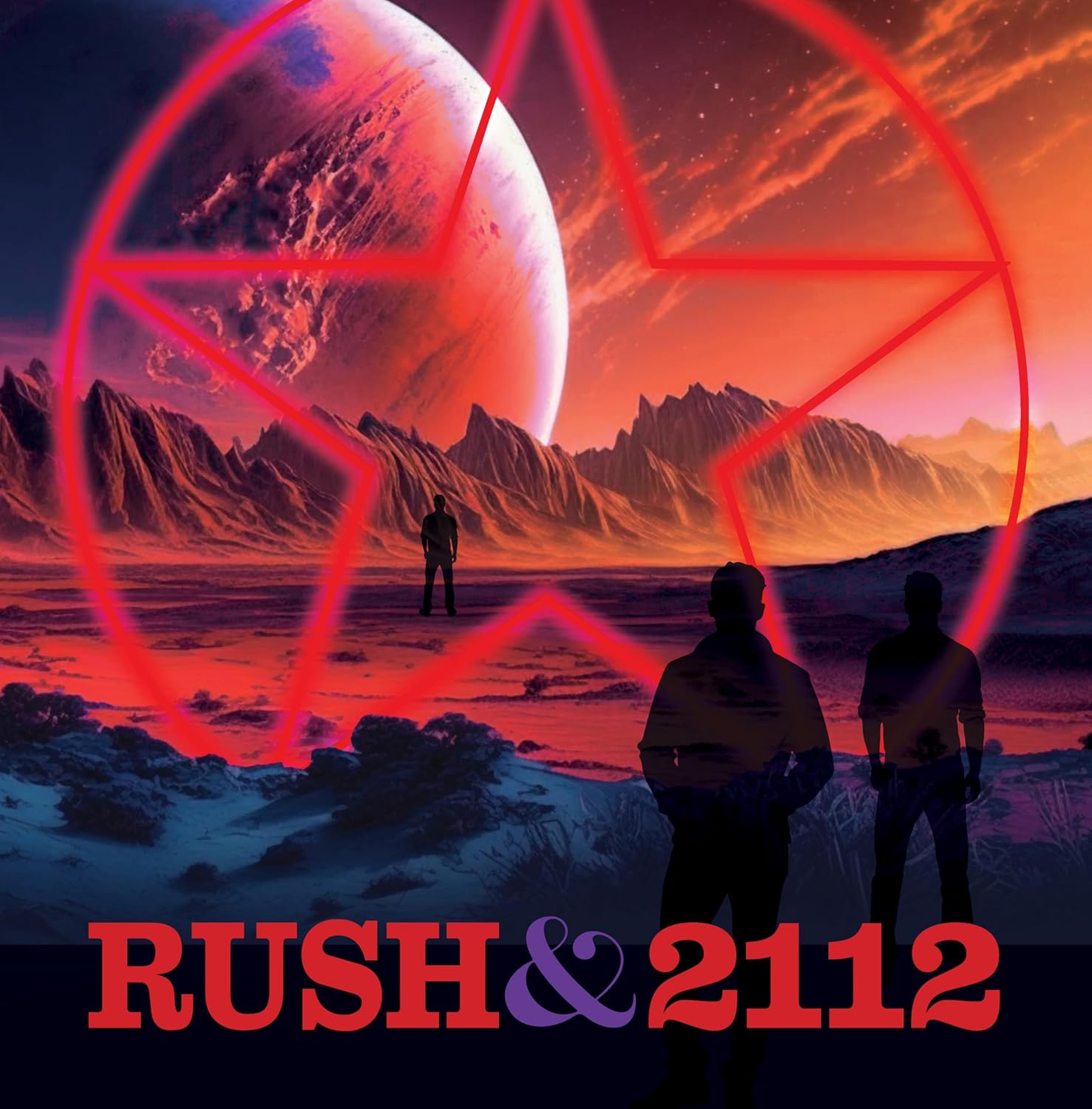
RUSH & 2112by Daniel Bukszpan
|
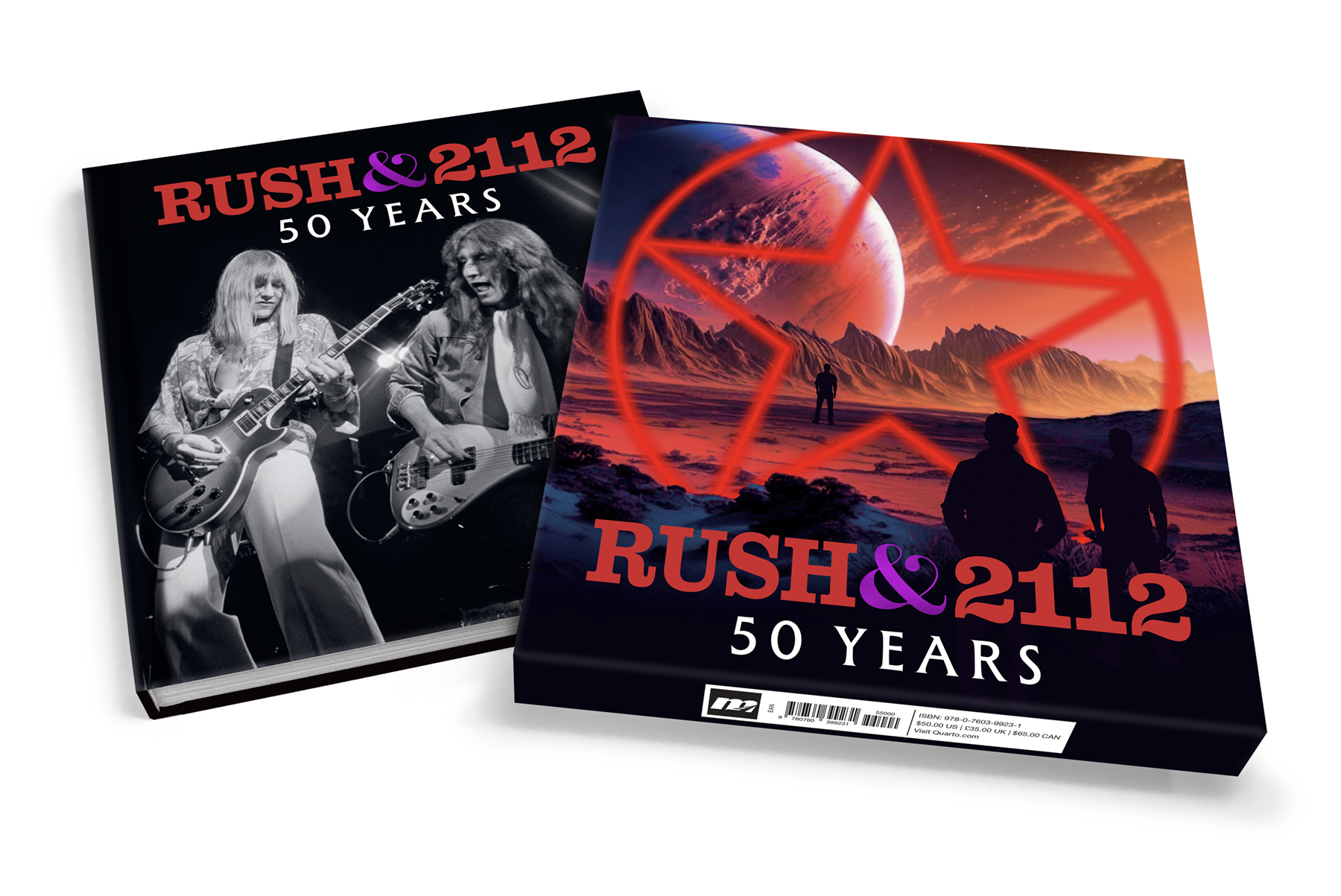
Celebrate the 50th anniversary of an undisputed prog rock masterpiece
with this richly illustrated and highly giftable slip-cased volume.
with this richly illustrated and highly giftable slip-cased volume.
Just in time for the band’s Fifty Something tour, Rush and 2112: 50 Years tells the complete tale of the most revered prog rock album of all time with bold photography, insightful interviews and commentary, and rarely seen performance and off-stage photography.
Rush formed in Toronto in 1968 and debuted their first album in 1974. Their second and third albums received middling reviews, then 2112 shot them into the stratosphere of global rock and began a wave of successful albums as their sound continued to evolve.
Rush fans new and old can expect:
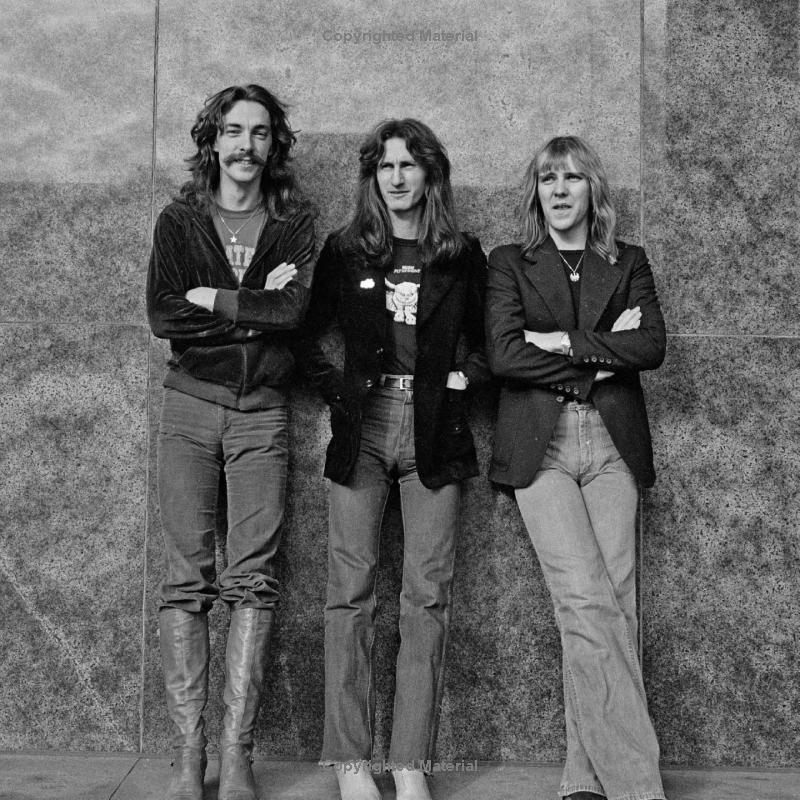
Rush holds an outsized place in popular culture, and this book showcases why: The virtuosity of the lyrics and music, the raw talent of its original trio of Lee, Lifeson, and Pert, and bold compositions in the ever-changing soundscape of the ’70s and ’80s led to a storied career, and over 40 million records sold. Many critics and fans consider Rush one of, if not the greatest rock band of all time, and this book helps explain how Rush rose to the forefront of musical stardom and sustained that popularity for decades.
Written by noted rock historian and avid Rush fan Daniel Bukszpan, this book is sure to delight new and old Rush fans alike from all over the world.
Rush and 2112: Fifty Years
Daniel Bukszpan
FRONTLIST | Mar 10, 2026 | On Sale Date: Mar 10, 2026
ISBN: 9780760399231
Motorbooks
CONTENTS
Introduction
SECTOR ONE
 1. Overture
2. The Holy Trinity
3. An Easygoing Relationship
&. Proot of Concept
6. Alignment
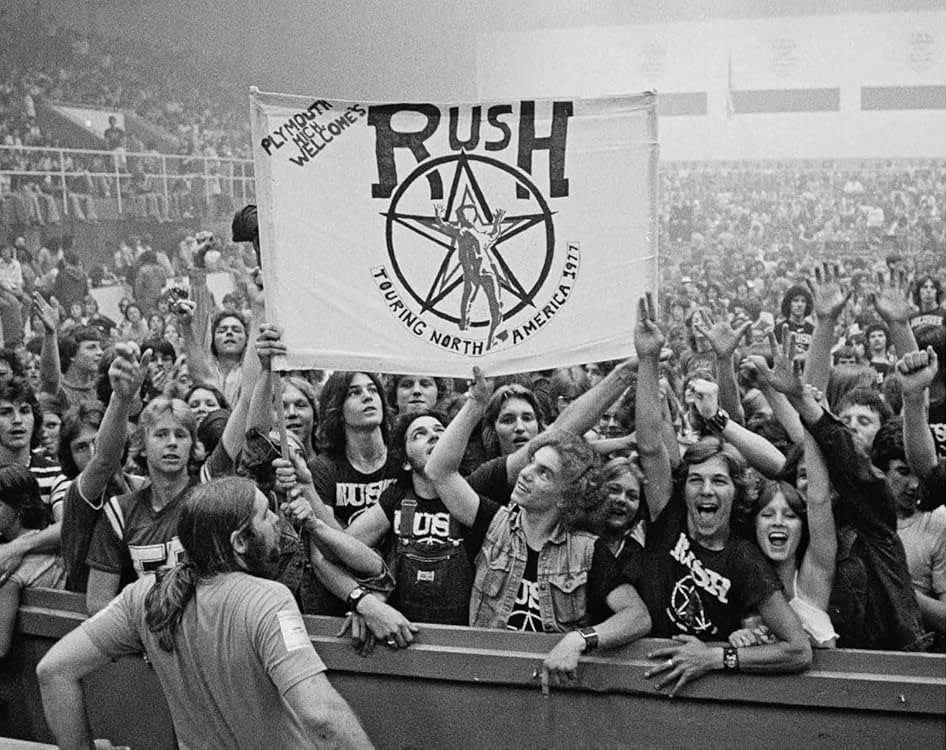
7. An Unwitting Logo
8. 2112 for Dummies
SECTOR TWO
1. Side One
2. Side Two
SECTOR THREE
1. "Neil's Neon Nightmare”
2. “Popping the Cash Register Open”
3. In Through the Out Door
4. What a Long, Strange Trip It's Been
5. The Nonchalant Mudslinging Express
6. Twenty-First Century 2112
Acknowledgments
Bibliography
Photo credits
Index
INTRODUCTION
2112 WAS RUSH’S FOURTH STUDIO ALBUM.
Released in 1976, it was their commercial breakthrough and established them as one of the most popular bands in the world, a status they still enjoy today. Despite making their final studio album in 2012, we’re not done with Rush. We may never be.
We’re not done with them because the music they created was so rich and complex that it always pays off, no matter how many times you listen to it. You can always go deeper on the next listen, and that’s because there’s so much depth to their music, the lyrics, and the themes they explored.
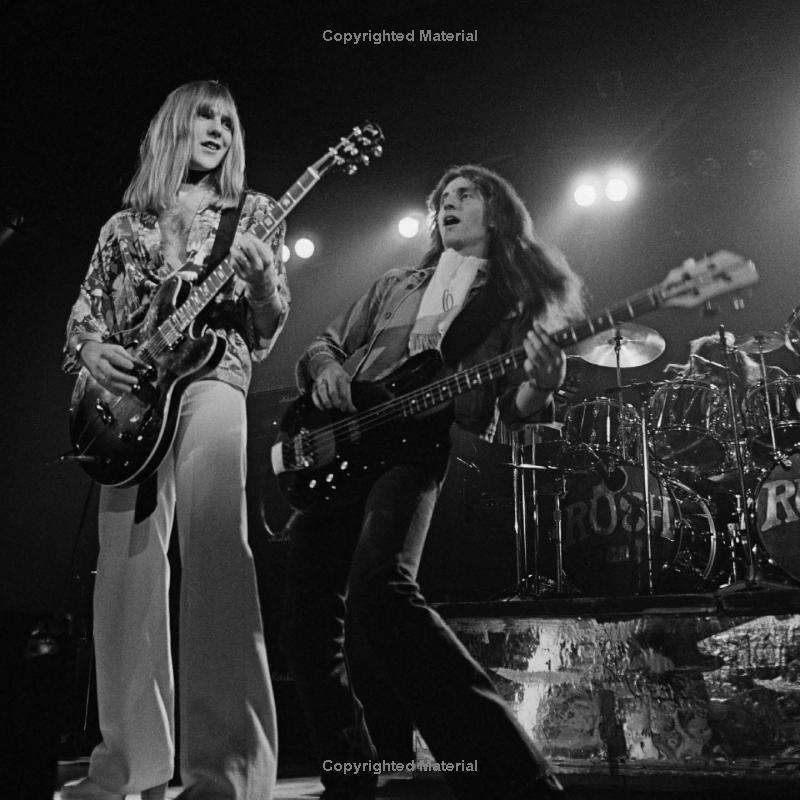 The group’s 1974 self-titled debut album was a straightforward and uninhibited rocker that gave no indication of the band they would become. The drummer on that record, John Rutsey, took his leave from the band, making it necessary for bassist Geddy Lee and guitarist Alex Lifeson to replace him. Their ultimate choice after a few auditions was Neil Peart. Not only was he the greatest drummer who ever lived, but he also wrote lyrics, which were like nothing before or since.
Everyone who knew the drummer described him as a big reader, and indeed, he was happy to be tucked away in some well-lit corner of the room, absorbing meaty tomes that casual readers would abandon after seeing nothing more than the title on the spine. He took it all in ravenously; it informed his lyrics, and to this day, no one has ever come close to copying what he did.
With Peart in the band, Rush first created Fly by Night and Caress of Steel, two inspired 1975 albums made by a band still searching for their identity. They found it on their fourth LP. It’s where they found their voice and then refined it. It’s where they transcended their influences and became something distinct. 2112 is where Rush discovered their identity, and they ran with it.
The title track is a futuristic, dystopian epic taking up all of side one. It tells the story of an individual living in a police state, and its lyrics are nightmare fuel reminiscent of the most anxiety-provoking episode of Black Mirror. It depicts a world no one would ever want to live in and takes a full album side to do it.
Their label, Mercury Records, initially had hoped for a single from this record. They didn’t get one, and history has proven that twenty-minute sagas about space dystopias have never made the top 40—nor will they ever. Nonetheless, a strange thing happened. This record, which was not commercial by any standard, became the group’s hottest seller yet. It defied every conceivable bit of conventional wisdom.
Rush had toured heavily since Peart joined the band, so much of the breakthrough they experienced with 2112 resulted from their road regimen. Still, something about this record - something beyond the tunes - made it connect with listeners. The music was complex but direct, and the lyrics about a lone individual facing off against conformity were something almost anyone could relate to.
The three members of Rush were uncompromising in their pursuit of stylistic change, so you can’t really say there’s a “Rush sound.” Sure, there’s Geddy Lee’s voice, an instrument never replicated by any other singer (although Michigan singer-songwriter Patty PerShayla has come very close on many occasions); but otherwise, there is no “Rush sound.” It always changed. Having said that, the band’s hallmarks of instrumental virtuosity and literature-inspired lyrics are fully realized for the first time on 2112; so if you want to argue for the existence of a “Rush sound,” this would be the starting point.
2112 can also be said to be one of the highest peaks Rush attained while working with co-producer Terry Brown. The band’s management brought him in to help them finish their self-titled debut, and after that, they would make eight more studio albums together, all classics up to and including 1982’s Signals.
After parting ways with Brown, Rush still made some truly monumental albums with several different people at the mixing desk. The run of albums the band made with Brown, however, is really, really hard to beat. They all have a certain quality that is absent from later albums, and no one can quite put their finger on what that is. It may simply be that the band and the co-producer were young and excited to be making records, and that enthusiasm spilled over into them.
It may also be that all the records they made with Brown were built upon basic tracks performed live as a band, with vocals and other touches overdubbed later. When you record live, you’re just going to get a little something extra that you can’t get with a click track. It simply will not be there if the band members record their parts separately, no matter how skilled the producer. Every record the band made with Terry Brown was recorded as a band, and that goes a long way.
While 2112 marked a beginning for Rush, it also marked an ending. It was the last time they relied almost entirely on a raw power trio sound on a studio record. Apart from some keyboard contributions from album cover designer Hugh Syme, what we hear on 2112 is the raw bass, drums, and guitar configuration of Rush - something they began to move away from on subsequent records. But even those subsequent records are built on basic tracks cut by three guys who loved playing together as a band, and that energy is present on 2112 from start to finish.
This is not my first rodeo when writing about this band. My book Rush at 50 was released in 2024, and as I was doing the publicity rounds for it on various podcasts, I realized why the story of Rush - particularly the story of making 2112 - is so compelling.
No one wanted them to make the album, no one encouraged them, and the record company could have pulled the plug on the whole enterprise at any moment. It was an existentially stressful moment for this band, but rather than tear themselves apart over the issue of their relative commerciality, they circled the wagons. They drew closer to each other. They resolved to be true to their vision even if it meant the end of the band, and the story of three people with ironclad belief in their vision - and each other - will always be compelling.
Gene Simmons of KISS made a similar point in an article called, “‘I Was Trying to Get Them Laid.’” Rush and KISS played together quite a bit between 1974 and 1976, and during that time, Simmons and his bandmates were front-row witnesses to the trio’s transformation from a “Led Zeppelin Junior” hard rock band to something else entirely. He said Peart had been the catalyst for that transformation.
“Neil read lots of books, and started to bring in that sci-fi, Isaac Asimov kind of thing,” Simmons said. “Plus, he knew lots of big words, like ‘condominium.’”
While the bassist always preferred the band’s more straightforward early material, one thing he said never changed about them was their commitment to their artistic vision and to each other. Since radio wanted nothing to do with them, this meant touring relentlessly - and the Canadian power trio understood that.
“Before MTV, cellphones, and iPads, there were only three or four TV stations and a few radio stations,” Simmons said. “The only way to get your music out there was to go to the people.”
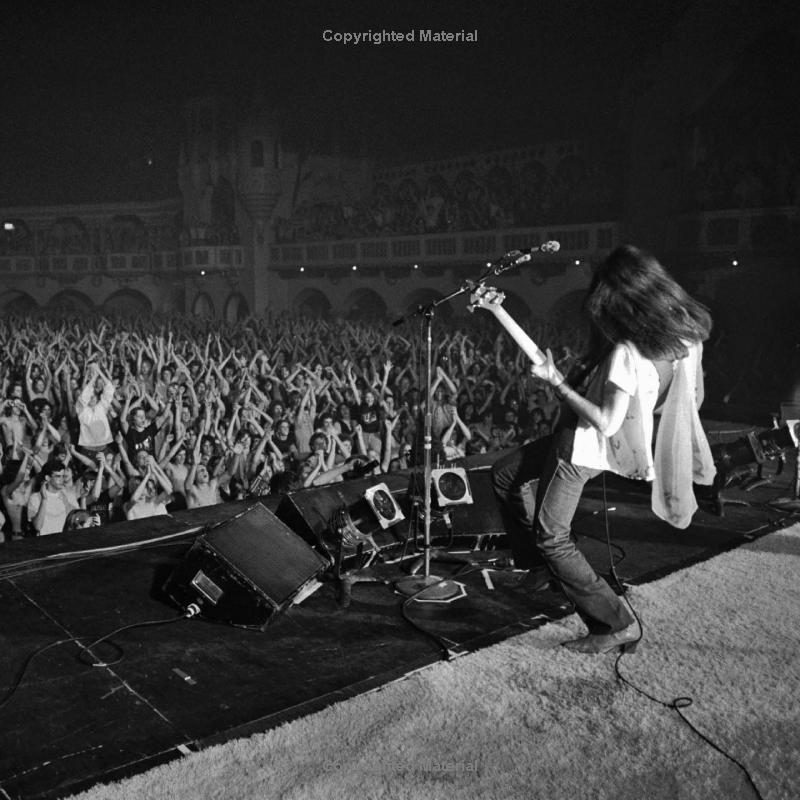 Rush did precisely that. Even in the middle of his own groupie-swathed bacchanalia, Simmons was able to see that Lee, Lifeson, and Peart were deadly serious about doing the hard work it took to get to the next level. The rock-and-roll lifestyle had its share of temptations and pitfalls, and endless horror stories exist of the many talented musicians who lost focus and succumbed to it, sometimes fatally. The KISS bassist said that Rush managed to steer clear of that even in the early days, and he invoked Alexandre Dumas’ The Three Musketeers to make that point.
“They were ‘all for one and one for all,’” he said. Decades later, 2112 is still considered one of Rush’s best efforts and one of the greatest concept albums ever made. The band caught a lot of flak for dedicating it to author Ayn Rand, a significant inspiration to Peart in crafting the title suite’s lyrics and overall theme. They even got called proponents of the Third Reich’s philosophy for it, a mendacious smear that stuck for decades.
2112 outlasted it. Rush outlasted it, and they outlasted the dude who said it. The guy is still alive at the time of this writing, but it’s probably safe to say that many more people have read the lyrics to “2112” than any of his articles. Furthermore, many who read his articles were Rush fans, who came away even more determined to stand by the group. The critics have never understood that their own criticisms have only made Rush fans dig in deeper and made them even prouder to champion the group. After all, when someone attacks something you love, you will defend it.
None of the changes in today’s technology, culture, or politics that have come since 1976 have diminished the album’s importance or immediacy. The music is still like nothing else ever made, which also goes for the lyrics. Since its release, countless artists have said they were influenced by it, that it changed their lives, that its story made them determined to live out their dreams despite stiff opposition. That’s why the listening public is not done with 2112, and as long as people have dreams that those in authority wish to thwart, 2112 will always be relevant.
SECTOR ONE
1. Overture
THE STORY OF HOW RUSH MADE 2112 is in many ways the story of their
association with co-producer Terry Brown. He and the band had a fruitful
partnership that lasted for almost a decade and spanned nine studio albums,
all considered indispensable pillars of the group’s catalog today.
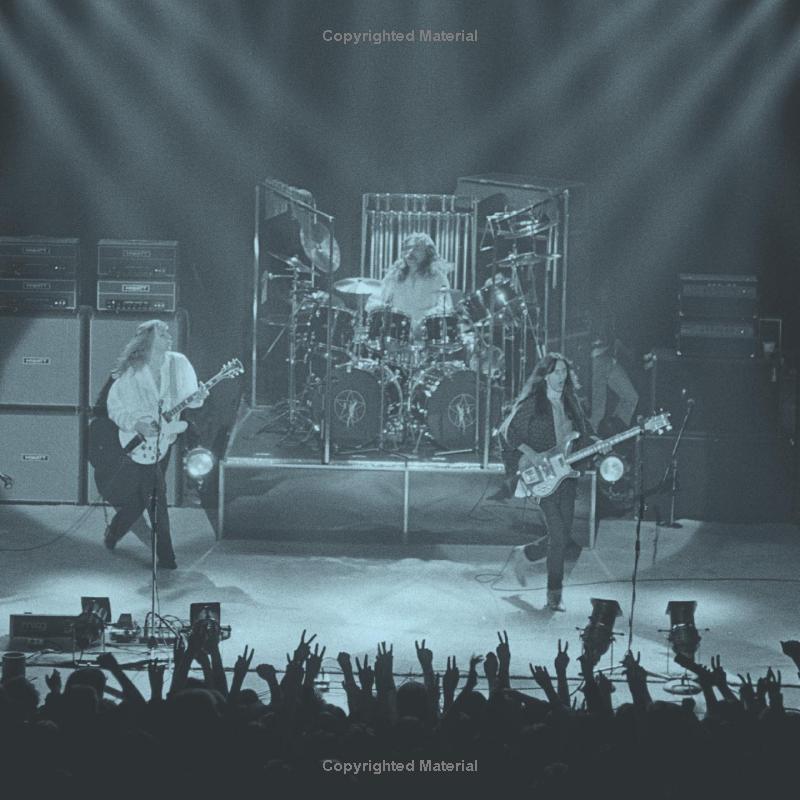 Rush craved growth and change on every album. The band always strived
to evolve, so each album they made throughout their career was intended to
sound different from the previous one. Still, if you had to describe an era of
the band as the “classic” era, the period between 1974 and 1982 covers it for
many people.
Rush craved growth and change on every album. The band always strived
to evolve, so each album they made throughout their career was intended to
sound different from the previous one. Still, if you had to describe an era of
the band as the “classic” era, the period between 1974 and 1982 covers it for
many people.
The band’s first three albums were all bangers. This is a proven scientific
fact that has been subjected to a withering peer review process by fans over
five decades, and the jury is in - those are outstanding records. There’s no
denying that 2112, however, was their first significant milestone. In 2016, no
less an authority than the band’s own guitarist Alex Lifeson told Classic Rock
that 2112 was the album where Rush first sounded like Rush.
“2112 was the first album where we really felt like we had an identifiable
sound,” he said.
After the association between the band and Brown ended, Rush went on
to work with different producers. Brown went on to work with other artists as
well, and both excelled in their respective efforts. Still, there’s just something
about that Brown-helmed run of albums that the trio worked on - there’s a
particular mood and atmosphere, and it’s only present on those records.
Their later career is full of excellent albums like Grace under Pressure, Presto,
Vapor Trails, and their swan song, Clockwork Angels, to name just a few. But
for those of us of a certain age who came to the band at a certain time, their
collaborations with Terry Brown grabbed us like no other music did. It made
us lifers, and we returned to those albums again and again. And while all those
nine albums are masterpieces, 2112 is right up there with Moving Pictures as
one of the band’s greatest works.
I. GEDDY LEE
Rush bassist and vocalist Geddy Lee was born on July 29, 1953, in Willowdale, a
Toronto neighborhood that also served as the birthplace for such luminaries as Corey
Haim and Howie Mandel. He was born to Morris and Mary Weinrib, Jewish immigrants
from Poland.
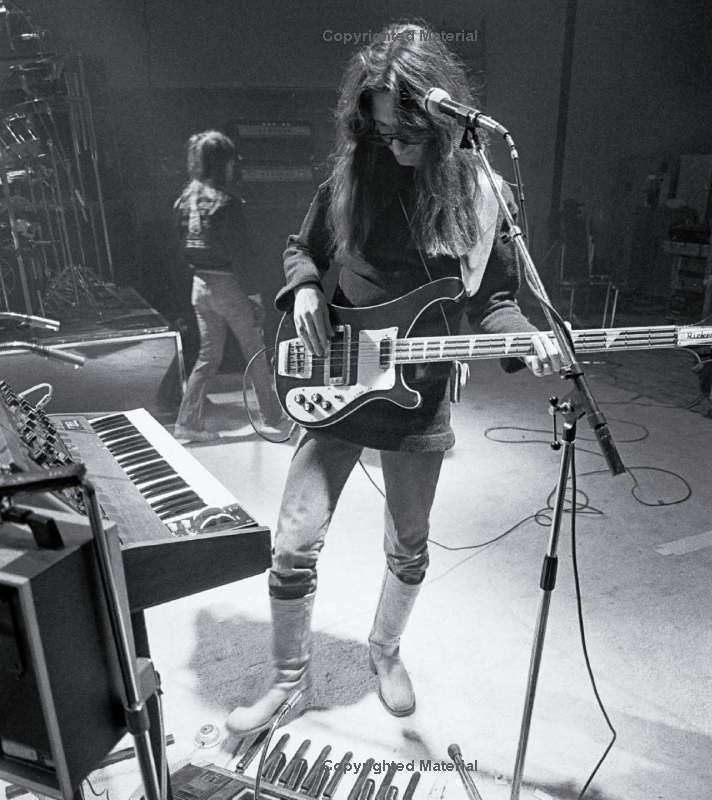
In 2019, Lee told New York City radio station Q104.3 that his parents met in a Nazi
work camp when they were both barely teenagers. They were eventually sent to the
Auschwitz concentration camp before being separated and shipped off to separate
facilities, presumably never to see one another again. Somehow, against extremely
steep odds, they reunited at a displaced persons camp at Bergen-Belsen at the end of
World War II and were eventually liberated.
“My earliest memories were my mother talking about the war and talking about
Hitler and about what had happened to her family,” Lee said. “I remember my mother
constantly reinforcing the idea that we had to keep the family together because these
terrible things can happen.”
Lee was only 12 when his father passed away at the age of 45, forcing his mother to
start working and support the family. This left him and his siblings in the care of their
grandmother while Mary was making ends meet.
By age 14, his interest in listening to music led
him to start playing guitar. Ultimately, he switched
to bass, which was not entirely his choice - it could
even be classified as a demotion in some quarters.
“Back in my day, nobody chose to be the bass
player,” Geddy Lee told Rolling Stone in 2020. “You
‘were always a guitarist, and somebody said, ‘Well,
we need a bass player,’ so they had a vote and you
became the bass player.”
Despite the semi-voluntary nature of the change
of instruments, Lee said he took to it immediately. If he had initially viewed it as a demotion, it didn't last long.
“I adapted to it very quickly and really loved
it,” he said.
Lee's decision to become a bassist was perfectly timed as it coincided with the psychedelic
movement. Musicians such as Cream’s Jack Bruce
approached the bass in revolutionary new ways,
transforming it from a background instrument that
only held down root notes. He and others, like the
Who's John Entwistle, expanded the definition of what
a bass could do, making it an equal contributor to the
song alongside the guitar and vocals. Lee said that
being in a power trio made that approach a necessity.
“The bass player has a bigger role in that format,
especially when the lead guitarist is soloing,” he
said. “You have to provide enough noise behind him
to keep it from sounding empty. So it’s a license to
be a bit obnoxious, which I always appreciated.”
Lee also cited the mighty Chris Squire of Yes as
a significant influence. A friend had played him the
song “No Opportunity Necessary, No Experience
Needed” off the band's 1970 Time and a Word album,
and if you've ever heard it, then you know the bass
performance is a propulsive beast that will not be ignored. It’s mixed even louder than the guitar on that record.
Lee knew he wanted to commit to a life in music,
but it might not have happened if his father had still
been alive. He characterized Morris Weinrib as a
tough customer with a strong presence, and maybe anyone who had experienced the horrors of the
Holocaust firsthand at a young age would have
turned out the same.
Lee said his father might have forbidden him
from leaving school to pursue playing music
professionally, and he had been such an imposing figure that his bass-obsessed son might have
listened. Still, he couldn't deny that his father’s
passing, while emotionally devastating, also created a power vacuum in his family’s home, allowing him to commit to music full-time.
Before too long, the basement in his home
became a rehearsal space, where he and his
like-minded musician friends could jam for
hours, doing so loudly and often, much to his
grandmother's chagrin. Once Lee began earning
a little money from performances, he dropped
out of high school to pursue music full-time.
Lee acknowledged that his decision had
disappointed his mother, who initially felt it
was a shanda. At the same time, it was, in some
ways, a tribute to his late father; the man had
experienced a lot of suffering and persevered
through it all, only to have his life end at age 45. It seemed unjust, to say the very least.
“All that work and all that grief, and he got
tipped off at an early age,” he said of his father. “I think that’s why I just want to keep playing...
While I have my faculties, I want to enjoy everything there is, see as much as I can, just make the most of life.”
He legally changed his name to Geddy Lee,
immortalizing his Polish mother’s accented pronunciation of “Gary.” He also inherited the role of
lead singer, the other position in a band besides
“bass player” that nobody wants. In 2015, he told
Rolling Stone that the lead vocalist slot was also
something he won by default.
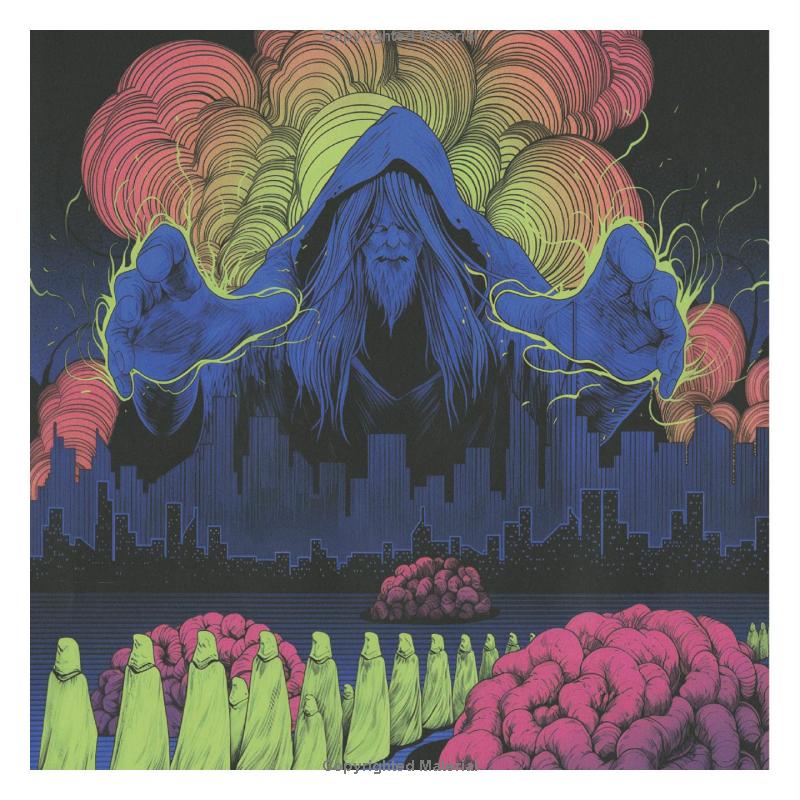 “Nobody wanted to sing, so they always said,
‘You do the singing,” he said. “I liked singing, but
I liked playing bass more and I still do.”
“Nobody wanted to sing, so they always said,
‘You do the singing,” he said. “I liked singing, but
I liked playing bass more and I still do.”
He said he had been influenced by singers
such as Steve Marriott of Humble Pie and John
Anderson of Yes, who sang in high vocal ranges.
Lee sang in a distinct, high-pitched register that
some mistook for Led Zeppelin’s Robert Plant
early on. Others, meanwhile, absolutely hated it
and still complain about it to this day, characterizing it as shrill and screechy.
The critics were determined to be complete
jerks about it - a pursuit they engaged in relentlessly - causing them to perseverate on this particular issue. Maybe someone had hit them over
the head with a folding chair, and now all they
could do was write “brittle and androgynous” over
and over again until they hit their word count.
Your mileage may vary, but Dr. R. Douglas
Helvering, composer and host of the Daily Doug YouTube channel, said these critics had it all
wrong. Lee's voice, while certainly not to everyone’s taste, Is the right tool for the job, in his view.
“Geddy just has one of those unique voices,”
he said. “It’s in the way that his face is structured,
the size of his nose, all of it comes into play with
the resonance that he specifically has. It’s got a
bright quality to it, but he’s also got a little bit of
a hooded quality.”
He added that many people over the years
have flung disparaging adjectives Lee’s way to
register displeasure with the way he sounds. The
real adjective that should be used to describe it,
however, is “strident,” which Merriam-Webster
defines as “characterized by harsh, insistent, and
discordant sound” and “commanding attention
by a loud or obtrusive quality.” He doesn't mean
it in a bad way, though.
“Sometimes music needs something, an
instrument that makes a strident sound, to make
the overall thing work,” he said.
Throughout his career with Rush and beyond,
Lee would be recognized as the world-class
artist that he is. He's influenced countless musicians, including Metallica's Cliff Burton and Iron
Maiden's Steve Harris, who seemed to take his
attention-grabbing, intricate, and overdriven
style to heart.
He's come a long way since the days of jamming in his grandmother's basement, and 2112 is
where listeners can see him lay the groundwork
for becoming the fully developed artist who
would emerge on subsequent records. In later
years, he would sing in a lower pitch and smooth
out many of his bass’s rough edges; but at the
time of 2112, his approach to both was aggressive
and extreme, and took no prisoners.
II. ALEX LIFESON
Rush guitarist Alex Lifeson was born on August 27, 1953. His real name is Aleksandar Zivojinović, and he was born to Serbian immigrants Nenad and Melanija Zivojinović in Fernie, British Columbia. Like Lee’s family, the Lifesons had their lives disrupted by World War II and sought refuge in the United States. The problem was that the land of the free didn’t want them.
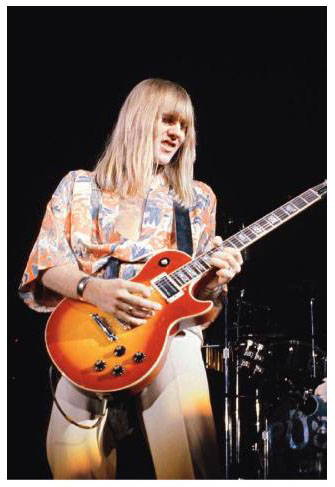 “They tried to get into the States, but they
were denied and then sent to Canada,” he told
Classic Rock in 2016. “In cities like Toronto, they
didn’t really want these people, but Eastern
Europeans could find work in the mines in British
Columbia. ... We eventually moved to Toronto in
the early 50s because there were greater opportunities there.”
“They tried to get into the States, but they
were denied and then sent to Canada,” he told
Classic Rock in 2016. “In cities like Toronto, they
didn’t really want these people, but Eastern
Europeans could find work in the mines in British
Columbia. ... We eventually moved to Toronto in
the early 50s because there were greater opportunities there.”
Lee and Lifeson’s family histories and exotic
ethnicities made junior high school a socially
daunting experience until they found one
another at age 13. Once that happened, they
were inseparable,
“We connected and we bonded,” Lifeson
told Rolling Stone in 2015. “We were friends in
grade nine, for example, ina class of 30 kids, and
we were not friends with anybody in that class,
except the two of us. So we were outsiders, but not in that sense of being ostracized or shut out
or something. We just kind of hung out, and we felt like everybody else was a jerk.”
They also became more interested in playing
music and less interested in showing up for school.
“We loved to hear all those great Cream songs,
play along to the record player, and play them better and better and better,” the guitarist said. “We
were beginning to look at music more seriously
and really trying to figure out what the musicians
were playing, how the bands worked. And we
loved to play. We just couldn't get away from it.”
Like Lee, Lifeson had also picked up the
guitar at age 12 but was never asked to put it
down In favor of another instrument. In 1996,
he told the publication Guitar One that he had
always enjoyed music from an early age and was
exposed to a wide range of genres growing up.
When the British Invasion gave way to the Summer of Love in 1967, however, Lifeson decided it
was time to commit his life to playing music. He
cited such artists as Jimi Hendrix, the Jefferson
Airplane, and the Grateful Dead as groups that
profoundly affected him.
“From that point on, music became what I wanted to do with the rest of my life,” he said.
He sald that his first guitar was a present from
his parents, who had paid the princely sum of
$25 for it. He described it as a Kent classical guitar that used steel strings instead of the standard
nylon. Although it left much to be desired, he learned his first riffs on it, which were “The Last
Time” and “(I Can‘t Get No) Satisfaction” by the
Rolling Stones.
Lifeson said that after Mick and Keef, he
moved on to Jeff Beck's stint with the Yardbirds
and to the superhuman guitar playing of Jimi Hendrix. The guitarist who had influenced him
the most In his youth, however, was Jimmy Page
of Led Zeppelin.
“He just blew me away,” Lifeson said. “I
wanted to play exactly like him!”
Before long, he began to be influenced by guitar players from the progressive rock movement, such
as Steve Hackett of Genesis. He described Hackett's
playing as “textural” and said it greatly affected how
he thought of his role in Rush.
“His parts in the early Genesis music influenced me
as far as the textures in this band,” he said. “As a result,
I always wanted my guitar presence in Rush to be quite
broad and fill a lot of space in an interesting way.”
Lifeson also credited studying classical guitar in
1972 with broadening and expanding his abilities. While
his classical technique would make a few appearances
on Rush records throughout the years, he said that the real benefit of the lessons was that they taught him the importance of keeping his chops up.
“I found that, if I practiced [classical pieces] for an hour or two a day, my fingers just felt amazing,” he
said. “I could play anything. That was the real benefit.”
Although it didn't occur to Lee and Lifeson right
away that they should form a band together, they
played together all the time. Both plugging into the
bassist’s amp. The pair even managed to secure
some remuneration for their performances, although
it did not come in the form of money.
“We played in coffee shops for food - chips and gravy,” the guitarist said. “We'd play British blues - mostly Cream stuff from the Fresh Cream period.
I would pretend I was Eric Clapton, Geddy would pretend he was Jack Bruce, and we'd play ‘Spoonful’
for twenty minutes.”
The pair also found another thing in common - the
devil's lettuce.
“The first time I ever got high was with Alex,” Lee
revealed to Rolling Stone in 2020. “He was just a terrific pothead, and a terrible influence on me.”
Lifeson met drummer John Rutsey in high school,
which led to the formation of Rush. The band played
local bars relentlessly, and eventually Lifeson came to
the same conclusion Lee did. He wanted to drop out
of high school and pursue music full-time. His parents
didn’t take the news any better than Lee’s mother.
We know this because an argument between
Lifeson and his parents about this very topic
was filmed for the documentary Come on Children, which depicted the lives of real teenagers, including one Alex Zivojinović. In one
clip from the documentary, he gets into a lively
debate with his parents in which he tells them
that the band can make $80 a night playing in Toronto bars, so what's the point of finishing high school? His parents, meanwhile, just
want the sullen, fidgeting pothead to finish the twelfth grade.
At one point, his father says something that
appears to be a joke gone awry. He tells his son
that it’s hard to support yourself even when you
do everything right, as he knew from his own hardscrabble existence. As an aside, he throws
in the statement, “Everything went wrong with
him so far.” and the room erupts with laughter.
One can see in young Alex’s eyes that the
words wounded him. In fairness to Nenad and
Melanija, though, they're just trying to stop their
kid, already a seventeen-year-old father, from
throwing his life away on something that sure sounded like a stupid fantasy.
“I don't see why I have to go through all the bullshit of high school to learn music,” Lifeson
retorts. It’s the exact thing no parent wants to
hear out of their teenager.
The clip is fascinating, and it makes an
appearance in the 2010 Rush documentary
Beyond the Lighted Stage. In a 2012 essay about
Came on Children, David Blakeslee of the Criterion Cast podcast wrote that it’s an inspiring few minutes of video for anyone considering taking
a risk in life when the voice of reason is rightly
begging them not to.
“Those of us who ever took it upon ourselves
to ‘drop out’ merely for the sake of dumping meaningless expectations imposed by others
can look to Alex as a hero for defying the odds
and proving the establishment wrong,” he said.
Decades later, the guitarist told CBC Radio
One's Tom Power that back then, he simply wasn’t
thinking about any of the real-world concerns
that his family was trying to impress upon him
and prepare him for. Even if they were correct and
his music career was a failure, he wasn't worried
about that either.
“I really had a belief in myself,” he said. “If this
music thing doesn't work out, well then I'll do
something else. I'll work with my dad as a plumber's assistant or whatever. But I really believed that
this was going to work out. I never worried about it
in the early days.”
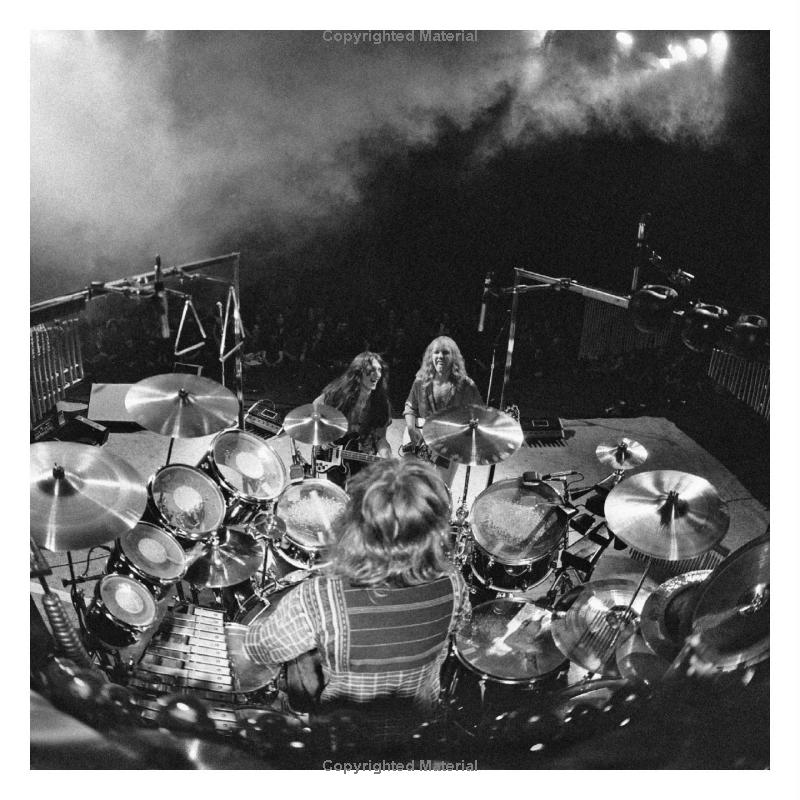 Lifeson defied the odds and became
the exception to the rule. Unlike countless
guitar-playing teenagers who dropped out of
school to become famous musicians, he actually
went and became a famous musician - so his
bratty impudence was rewarded.
Lifeson defied the odds and became
the exception to the rule. Unlike countless
guitar-playing teenagers who dropped out of
school to become famous musicians, he actually
went and became a famous musician - so his
bratty impudence was rewarded.
Still, if there's anything like an “alas” to be found
in Lifeson’s career, it’s that he remains a criminally underrated guitarist. The website HowStuffWorks ranked him at #2 in the article, “The 22 Most Underrated Guitarists of All Time,” in which they characterized his playing as “out-of-this-world-level
incredible.” So, what gives?
“Alex Lifeson wrote some of the best riffs
you'll ever hear, and they're absolutely infectious and addictive,” Mark Urban wrote, adding that
when you play in a band composed entirely of
virtuosos, someone is bound to get overlooked in all the oohing and aahing. It’s just too bad it had to be him.
“Lifeson’s playing is some of the best in rock
history,” he said, perhaps trying to single-handedly
give the guitarist all the accolades he got screwed
out over the years. “His ability to bounce back and
forth from different complex time signatures without missing a beat is unbelievable.”
The guitar playing that Lifeson produced on
2112 showed him to be an artist well on his way
to occupying a singular niche among the masses of guitar heroes who have come and gone. In
1996, he told Guitar One that while the band
would achieve many great things since then, 2112 was the creative breakthrough that set the tone for the rest of their career.
“I think 2112 was the turning point for Rush in
general, and that was the beginning of my original style,” he said. “There’s a lot of aggression
and anger on that record, and I think, because it was written so much from the heart, it was
where we began to develop a band signature.”
III. NEIL PEART
Drummer Neil Peart was born on September 12, 1952, in Port Dalhousie in the Canadian province of Ontario. He entered Rush’s orbit in July 1974 when original drummer John Rutsey parted ways with the band for health reasons after the release of their self-titled debut album.
Stylistically, his playing was as different from Rutsey’s as it gets. Rutsey had been a basic backbeat drummer whose simple style was perfect for the band’s first record - the only one in their entire catalog that could be classified as basic, meat-and-potatoes hard rock. As good as the debut is, Lee and Lifeson were already itching to move on from that style into a more progressive one; and Rutsey wasn't interested in pursuing that. It just didn’t interest him.
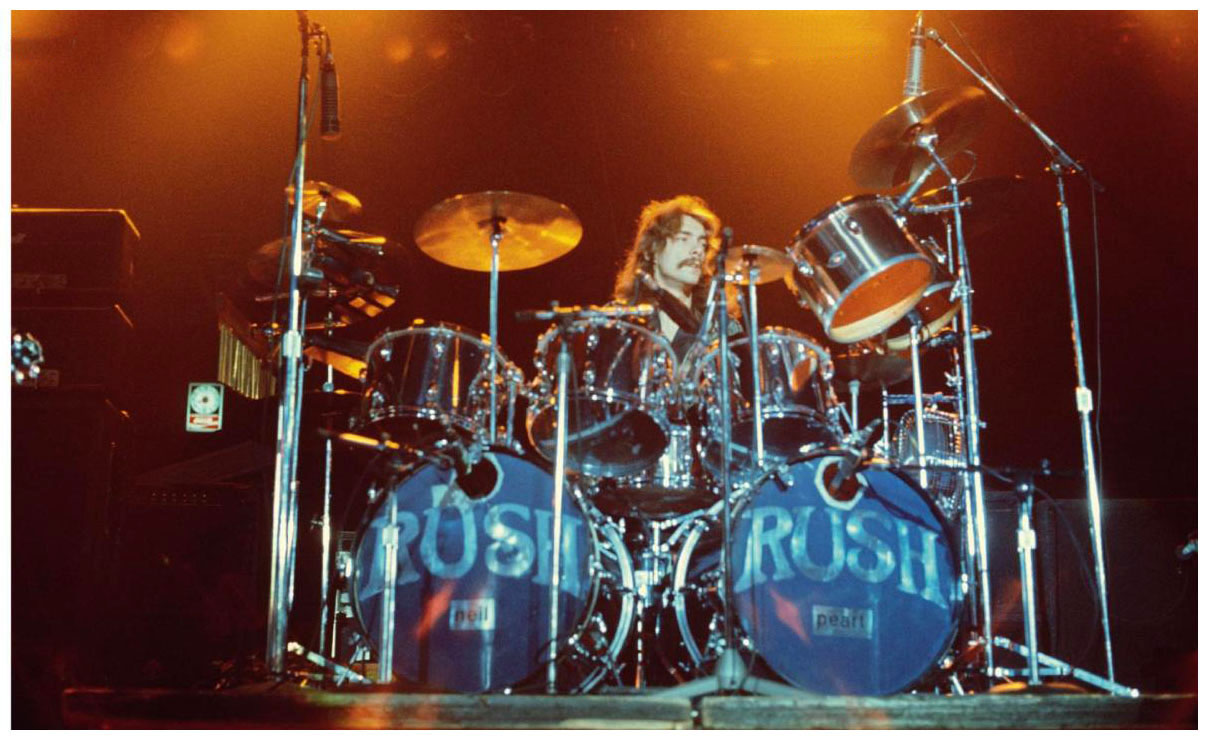 Peart, meanwhile, was instantly receptive to playing the more adventurous music Lee and Lifeson wanted to create. He had taken up drums when he was thirteen years old, and by his own admission, everything else in his life permanently fell by the wayside at that point. All he wanted to do was play and play and play, and between that and his rabid creative curiosity, he was very much simpatico with the bassist and guitarist. He was the perfect drummer for the music Lee and Lifeson wanted to explore next.
“When I started playing, I played in R&B bands,” Peart told Rolling Stone in 2015. “I played James Brown, Wilson Pickett, Otis Redding, and all that.”
Eventually, Peart moved on to the same hard rock music that had inspired Lee and Lifeson, thanks in part to the deranged performances of the Who’s Keith Moon. In 2003, he told Zildjian.com that he also took a lot of early inspiration from Mitch Mitchell of the Jimi Hendrix Experience, Michael Giles of King Crimson, and Bill Bruford of Yes. In 2015, he told NPR that as much as he had gushed over Moon and the like over the years, he traced it all back to Gene Krupa.
“He was the first rock drummer, in very many ways,” he said. “He was the first drummer to command the spotlight and the first drummer to be celebrated for his solos, because they were very flamboyant.”
Peart also brought something essential to the band. He could write lyrics, something no one else in Rush felt particularly compelled to do.
He didn’t write in a typical rock style, so
there were no references to “baby” or “mama”
and nothing about how anyone had done him
wrong. It was almost entirely influenced by literature, something no lyricist before or since has
embraced to the degree Peart did. In 2015, he
told Rolling Stone that it wasn't just because he
liked big, pretty, multi-syllabic words - rather, his
lyrical choices made musical sense.
“Some of those formal phrasings were
because I was very much driven by rhythm of
words,” he said. “A line will strike me just because
of its drumming rhythm.”
Peart found himself in a bit of a pickle with the
press for extolling the virtues of Objectivist writer
Ayn Rand in the gatefold of 2112. The concept of
the "2112" suite had some similarities to her 1938
novella Anthem, so in 1991, he told the radio show Rockline that to avoid looking like a plagiarist,
he added a line to the credits that said, “With
acknowledgment to the genius of Ayn Rand.” He clarified that it was less about taking her literally,
though, and more about taking inspiration from
her individual-against-conformity point of view.
“That album came out of a time of turmoil for
us, where a lot of people were trying to tell us what to do and how to commercialize our music,” he
said. “I think that sense of rebellion and the sense
of repression that we felt from those around us
came through the music and it has such a strong
sincerity about it because we really did feel that
way at the time, that it was us against the world.”
Peart’s lyrical prowess evolved as the years
passed, and he was repeatedly recognized
for his virtuosity on the kit. Fellow phenomenal drummer Stewart Copeland of the Police
told Rolling Stone in 2015 that Peart - whom he
described as “the most air-drummed-to drummer of all time’ - was entirely deserving of every
accolade that was ever thrown his way.
“Neil pushes that band, which has a lot of
musicality, a lot of ideas crammed into every
eight bars,” Stewart Copeland said to Rolling Stone in 2020. “But he keeps the throb, which is the important thing. And he can do it while doing
all kinds of cool shit.”
In 1997, the drummer was blindsided by tragedy when his nineteen-year-old daughter Selena
died in a car accident. Less than a year later, his
wife Jacqueline Taylor died of cancer. In 2015, the
famously agnostic drummer told Rolling Stone that
at the time, he briefly blamed mystical forces for
what had happened to his first wife and daughter.
“When something really shitty happens, of
course immediately you look to why,” he said. “I
went all supernatural: ‘Somebody must have put a curse on me, I must have done something really
horrible, God must be mad at me.’ I had to sift
through all of that shit again looking for meaning.”
After over a year of grieving on a solo motorcycle journey that took him through North and
South America, he returned to the band, which
had gone on an indefinite hiatus. In 2000, he
married photographer Carrie Nuttall; and a
decade later, they had a daughter named Olivia.
The band remained active until the R40 tour in
2015, at which point Peart devoted himself to his
family life full-time.
Sadly, he didn’t get to enjoy it for long. Not
long after coming off the road, he was diagnosed
with glioblastoma, a highly aggressive form of
brain cancer. He lived with it for over three years
and let only a small handful of people know, such
as his family, bandmates, and a few other close associates. He had asked them all to keep it a
secret, which they did until three days after he
passed on January 7, 2020.
When it was announced, musicians from every genre weighed in with comments about
what he had meant to them, how much he had
meant to them, and how much they had been
inspired by him.
“It absolutely breaks my heart to pieces to get
the news of the passing of one of my greatest
heroes of all time.” said Dream Theater drummer
Mike Portnoy on his Instagram page. “Neil Peart
will always be a mentor and a hero to me and his
influence on me as a drummer for the past 40
years is absolutely impossible to measure.”
It’s been said before, but it bears repeating: Neil Peart was the greatest drummer who ever lived, and Rush would not have become the band they became without him. Furthermore, the idea of replacing him is daunting.
He was the youngest drummer ever to be
inducted into the Modern Drummer Readers Poll
Hall of Fame at thirty, so on a technical level,
very few people could match him. And of those
who could match him, were they also big readers
who could craft the same type of lyric as Peart?
Absolutely not.
Since his passing, fondness for him and his
work has not diminished; and in the Internet age,
he arguably has more reach and influence than he ever did before. In fact, there’s a persuasive argument to be made that he’s more popular now than
ever, since Spotify and YouTube are affording his
music unlimited free access to new generations of listeners, and they just keep getting born every
day. In that sense, he joins a pantheon of musicians like Freddie Mercury, Jimi Hendrix, and John
Lennon. Their lives were cut short, but the music
was too good for anyone to leave it at that.
end excerpt...
Rush & 2112: 50 Years