


|
All The World's A Stage. Again
|
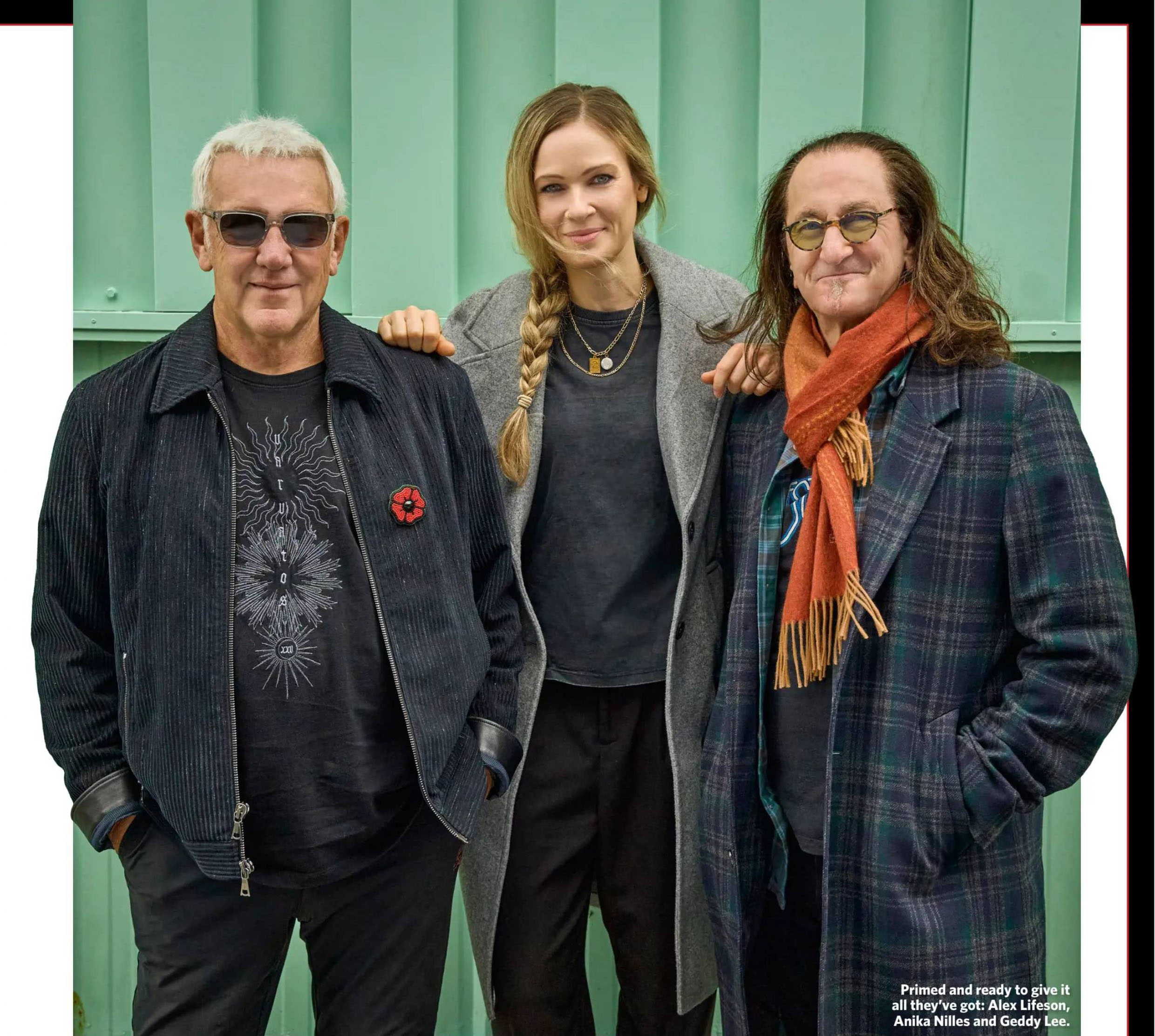
The death of their drummer/lyricist Neil Peart in 2020 looked to signal the end of Rush. But after a lot of soul-searching, and the pull of playing those songs on stage resurfaced, they are to tour again. In our exclusive interview, Geddy Lee and Alex Lifeson explain how, and why, it happened.
All The World's A Stage. Again
Interview by Philip Wilding
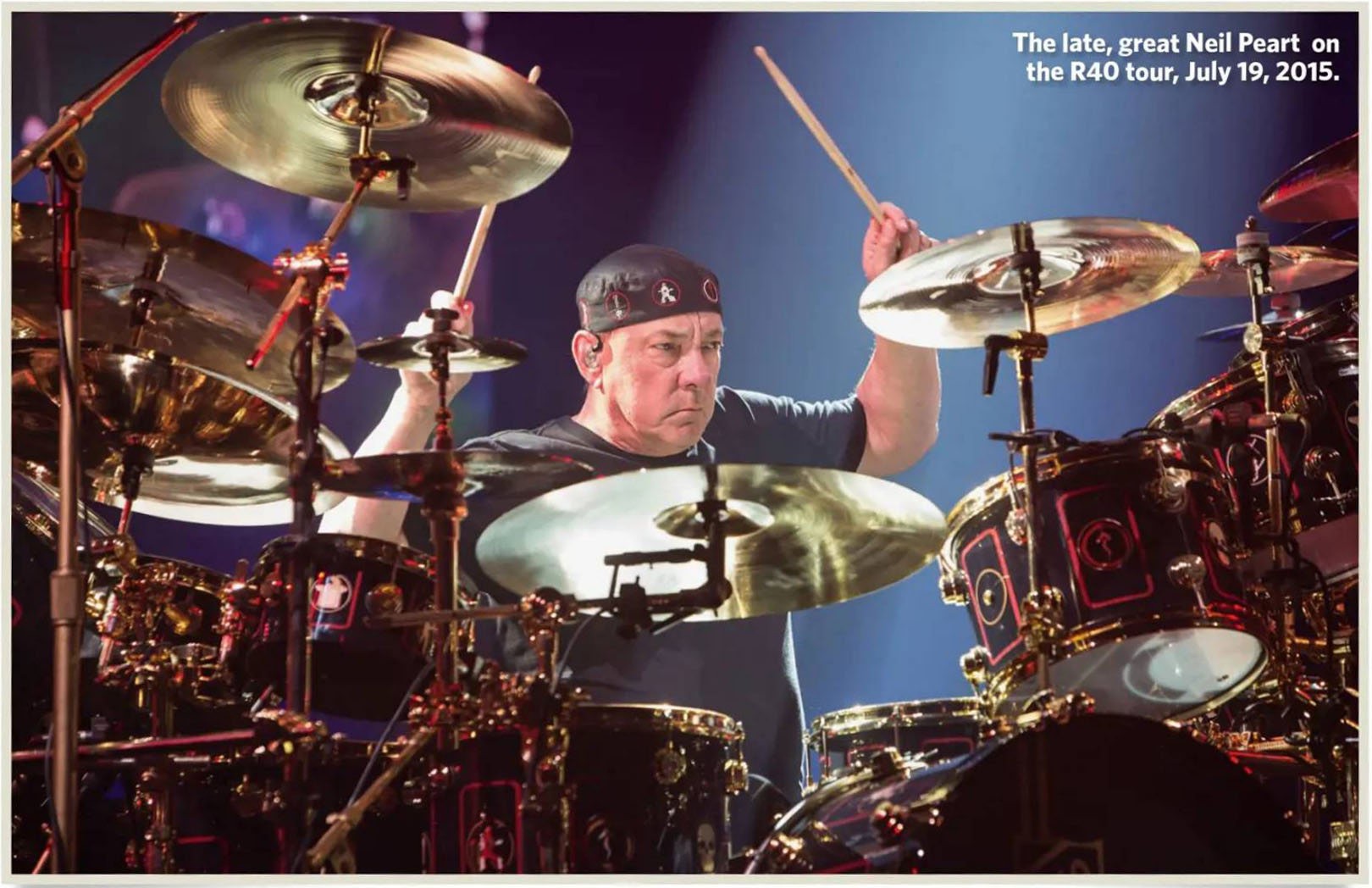
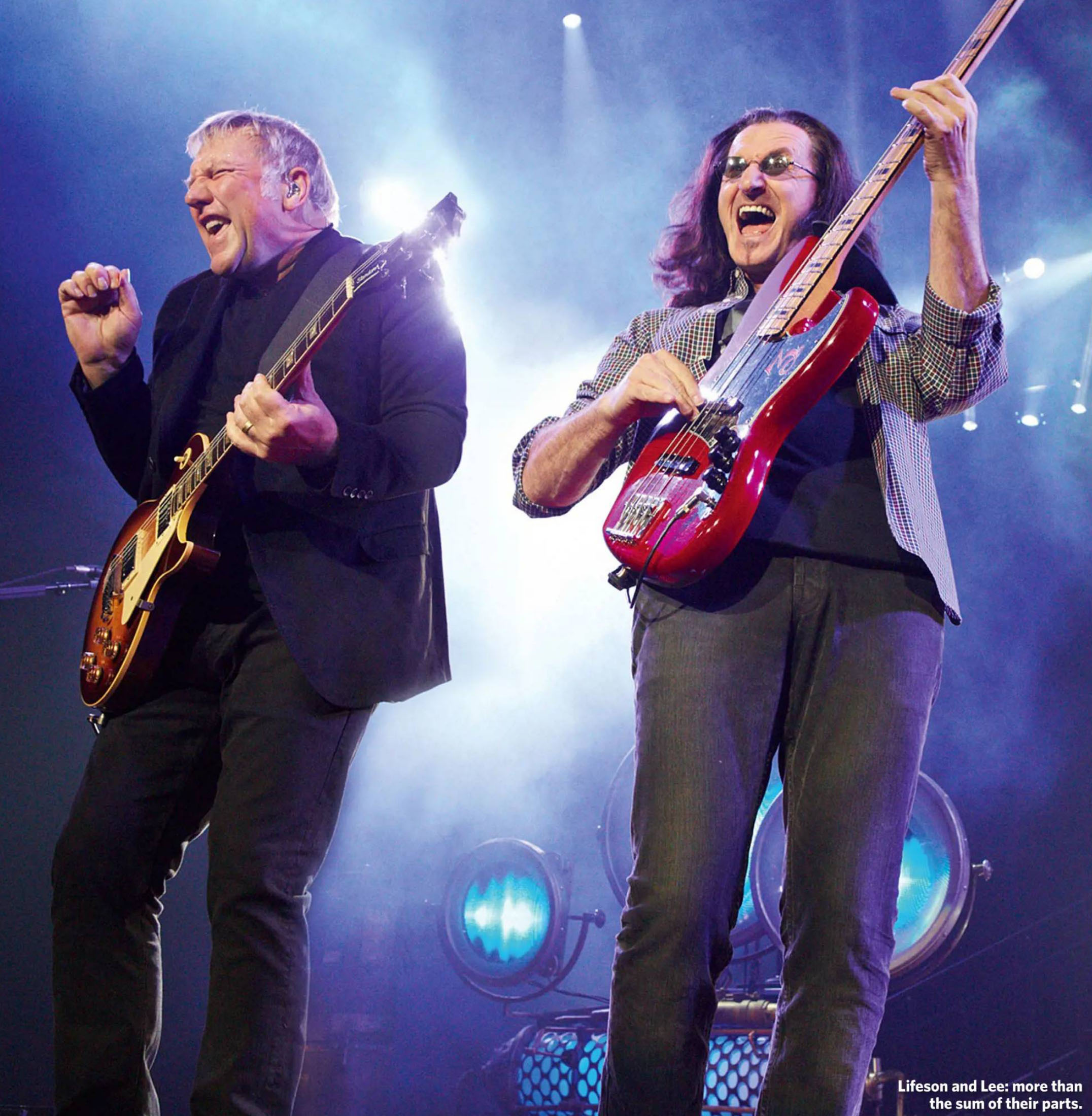
To get to the beginning, you have to go back to the end. It’s August 1, 2015, and the Forum in Los Angeles is in disarray. It’s the final curtain call on Rush’s R40 tour, and for the first and last time in their four-decade career, at the end of the set Neil Peart has stepped off his drum riser and gone to the front of the stage to hug his two bandmates Geddy Lee and Alex Lifeson. “It was a beautiful moment,” Geddy would say later.
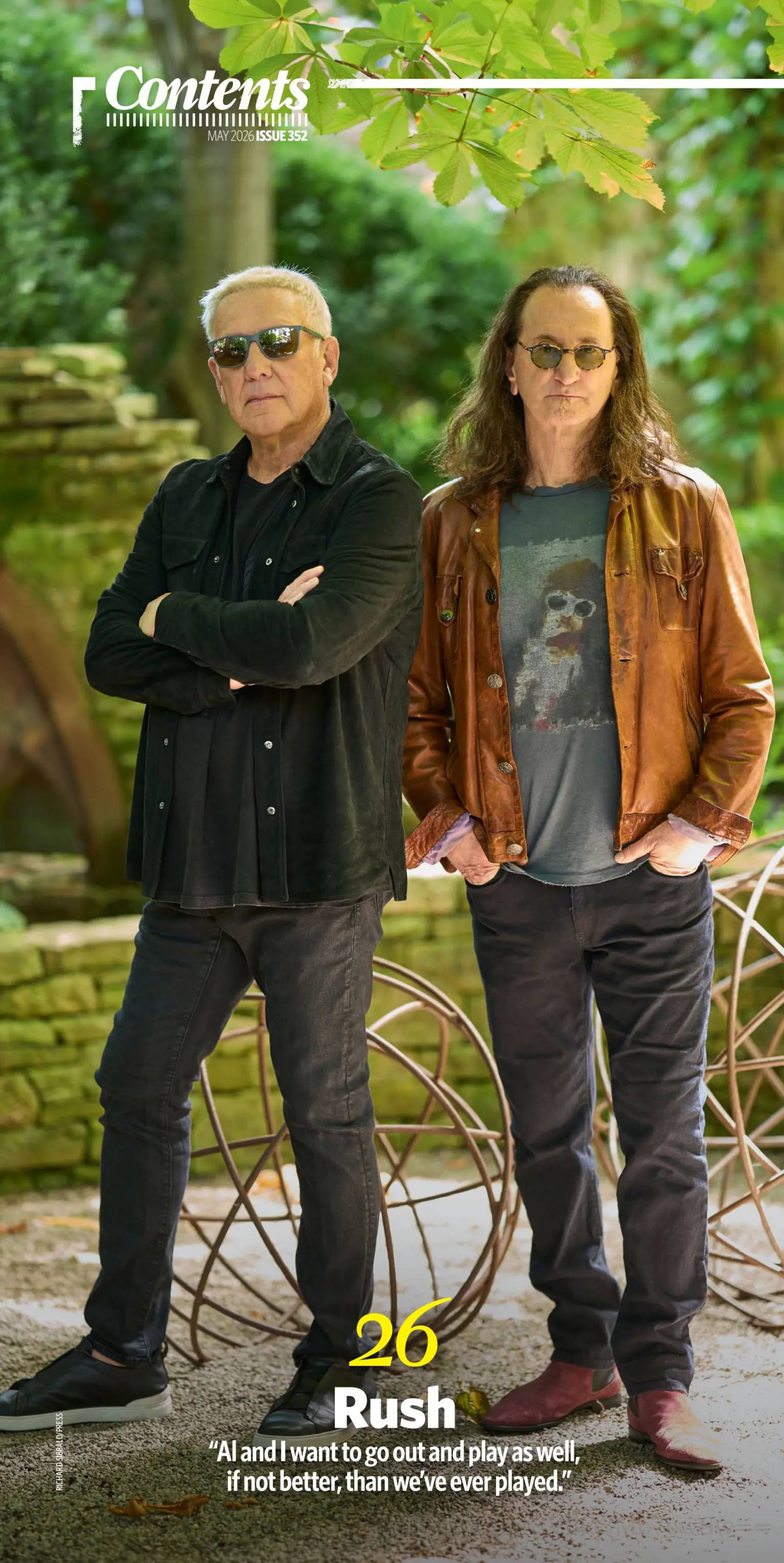 For his part, Alex had been waiting for the final moment — not Neil’s embrace, neither of them knew that was coming as his way of saying goodbye — literally watching from the Forum stage the minutes tick away on the giant clock on the back wall of the venue.
“I remember being on stage and thinking how many times we’d played the Forum and wondering just how many times we’d done Working Man [the final song of the show] there, because it’s pretty much been in the set since day one,” said Alex.
“It was a weird feeling knowing that was likely the last time we’d play any of those songs together. I tried to soak in every moment and object at that last gig. I counted down the minutes on the clock they have there, you can see it from the stage.
“I looked at my bandmates and missed them already, and I felt sad to see such joy in Neil’s face when we were down to the last few bars of our last song played together, as we finally finished our set.”
Many in the audience were weeping openly as Geddy said he’d see us down the road some day and Neil waved one final time before disappearing into the shadows.
Yet here we are, some 11 years down that road. It’s January, a blustery, rain-filled grey morning in London’s salubrious Mayfair neighbourhood — a far cry from that warm Californian evening when Rush came to a halt. We’re sitting in a suite in the Connaught Hotel, the wind rattling the picture window behind us. The last time Lifeson and Lee played the LA Forum was for the Taylor Hawkins tribute in 2022, and going back there to perform took an emotional toll. It was, Lee reflected, “like returning to the scene of the crime”. Which begs the question: why are they beginning the voluminous Rush Fifty Something tour (on June 7) with four shows at that same venue?
Alex Lifeson: Staring at that same clock where it ended, yeah.
Geddy Lee: Supremely stupid idea. It’s a massively stupid idea, because we’re going to be so emotional already, that first show without Neil, and then to be in that building. What the fuck was I thinking?
Lifeson: Yeah, what were we fucking thinking?
While scheduling a tour might not seem to be one of the band’s strengths, being able to sell tickets
for it is. Since Rush’s announcement in October last year that they were going to be playing a short
run of summer shows in 2026, demand has been
so high that the tour will now see the band out on
the road throughout North America from June and
they won’t be home until Christmas. Then more
shows in South America at the beginning of 2027
will segue into the band’s first European and UK
shows — the UK leg beginning at Glasgow Hydro
on March 8 - in 14 years. The band estimate they’ll
be out on the road for the best part of two years.
Lee: To be honest, originally we were only going
to do those summer dates. Like six or seven
residencies, and that was it. When they did the
announcement, and the tickets were gone in an
instant, our new management [Rush brought in Q Prime (Metallica, Greta Van Fleet) to help manage
this tour] became very bullish. They thought some
more shows would go well. But nobody saw that
response and it just snowballed.
When we talked about how a tour would look,
we said: “Well, if we’re going to tour, I would like
to go back to England, and I would like to play
Europe. It’s been a long, long time.” So that was
sort of in the background. And we wanted to make
that happen this fall, but all the venues we wanted
here were already gone.
Lifeson: You need like a year and a half ahead of time to get in those rooms...
Lee: Q Prime came back and said why don’t we play some more American dates...
Lifeson: So, we said okay, you know, like idiots. And now there are so many dates.
How are rehearsals? There are so many songs you have to play, but whittling the set down must be a near impossible task? I’m assuming three-hour sets are now a thing of the past?
Lifeson: I think by law that you’re not allowed to play for three hours at our advanced age.
Lee: Some guy will come in with a stopwatch and raise a finger telling us to stop. But to answer your question, rehearsals are going really well, we’re up to speed on about twenty-five songs.
Lifeson: We started whittling them down from around 900,000.
The tour is already running into 2027. I saw you at the end of R40, and even though the show was peerless you were pretty beaten up from the tour. And although you’re both in great shape, this tour is going to be a long haul at any age.
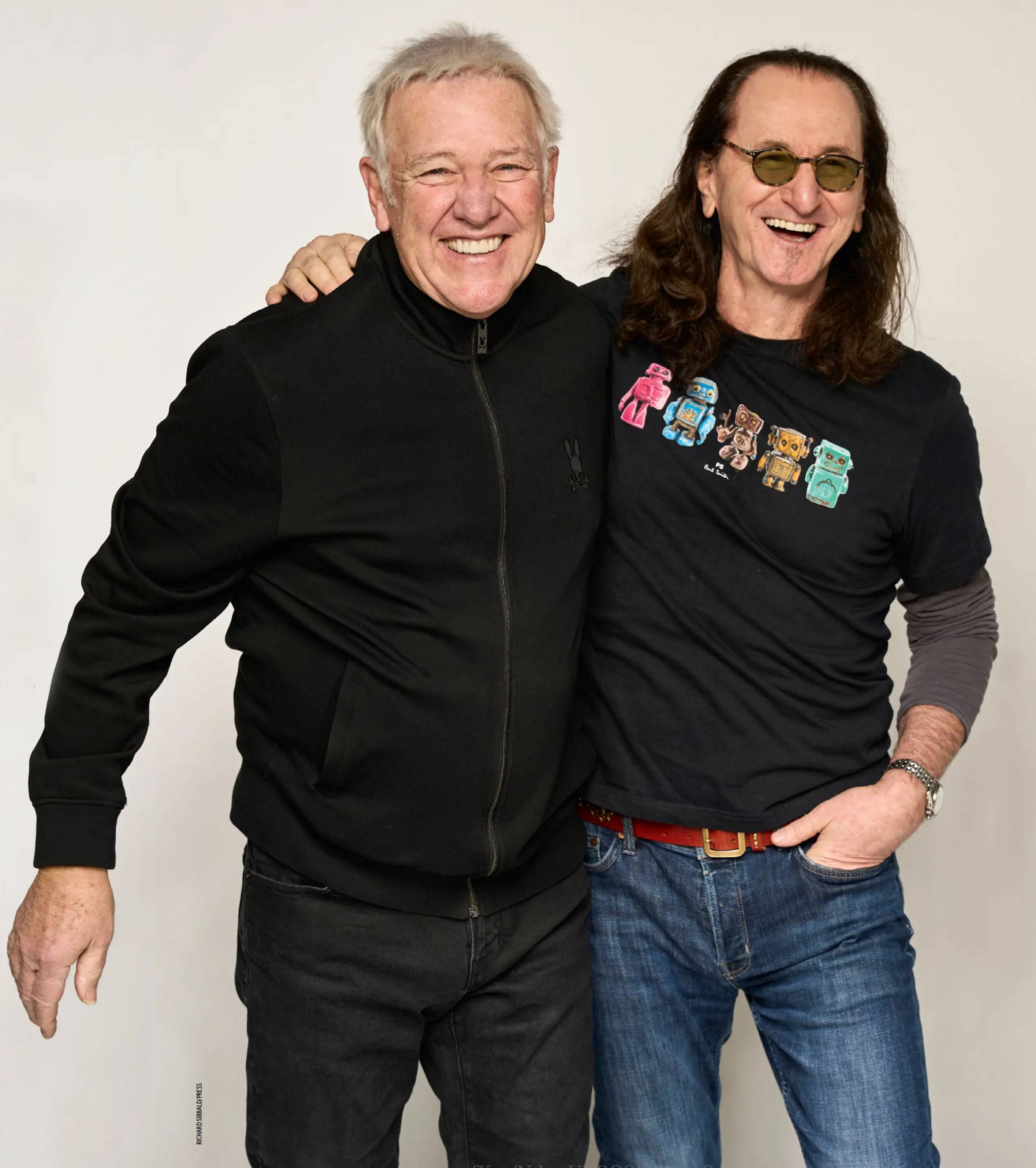 Lee: I mean, the way we approach a tour now, you have a different way into it.
Lifeson: We’re really making an effort to stay fit in many ways, mentally and physically. It’s inevitable you age, and you slow down, so it’s more of a challenge to get through without some new condition.
Lee: And part of the allure of doing this is the challenge itself. You know, Al and I want to go out and play as well, if not better, than we’ve ever played, and present the songs in a way that our fans will be really happy to hear them. The support for this tour is overwhelming, and we want to earn that by giving them the show they want and in a way that they’ve been asking us to do since 2015. My inbox is always full of love and requests from fans. So we said yes, we’re going to do it, and we’re going to do the best we can. And of course, it’s a different era, we’ve got a few more miles on the clock since the last time, but we’ll be fine.
Going back to what we said about the setlist, what is going to make it easier is that we decided right from the beginning that we won’t play the same show every night this time around. There’s going to be a turnover of about forty per cent of the songs that will change from night to night.
Lifeson: He means just to make things a little harder.
Lee: Obviously there are certain songs that we’ll play every night. But one way to have our cake and eat it too is to flip a certain number of those songs, so that if somebody comes back the second night, they’re going to hear some of those songs that they didn’t hear the first night. They come back the third night, they’re going to hear another set yet again. I don’t really know how it’ll work in practice, but we have five evenings of music with different songs, and we’ll keep mixing them up.
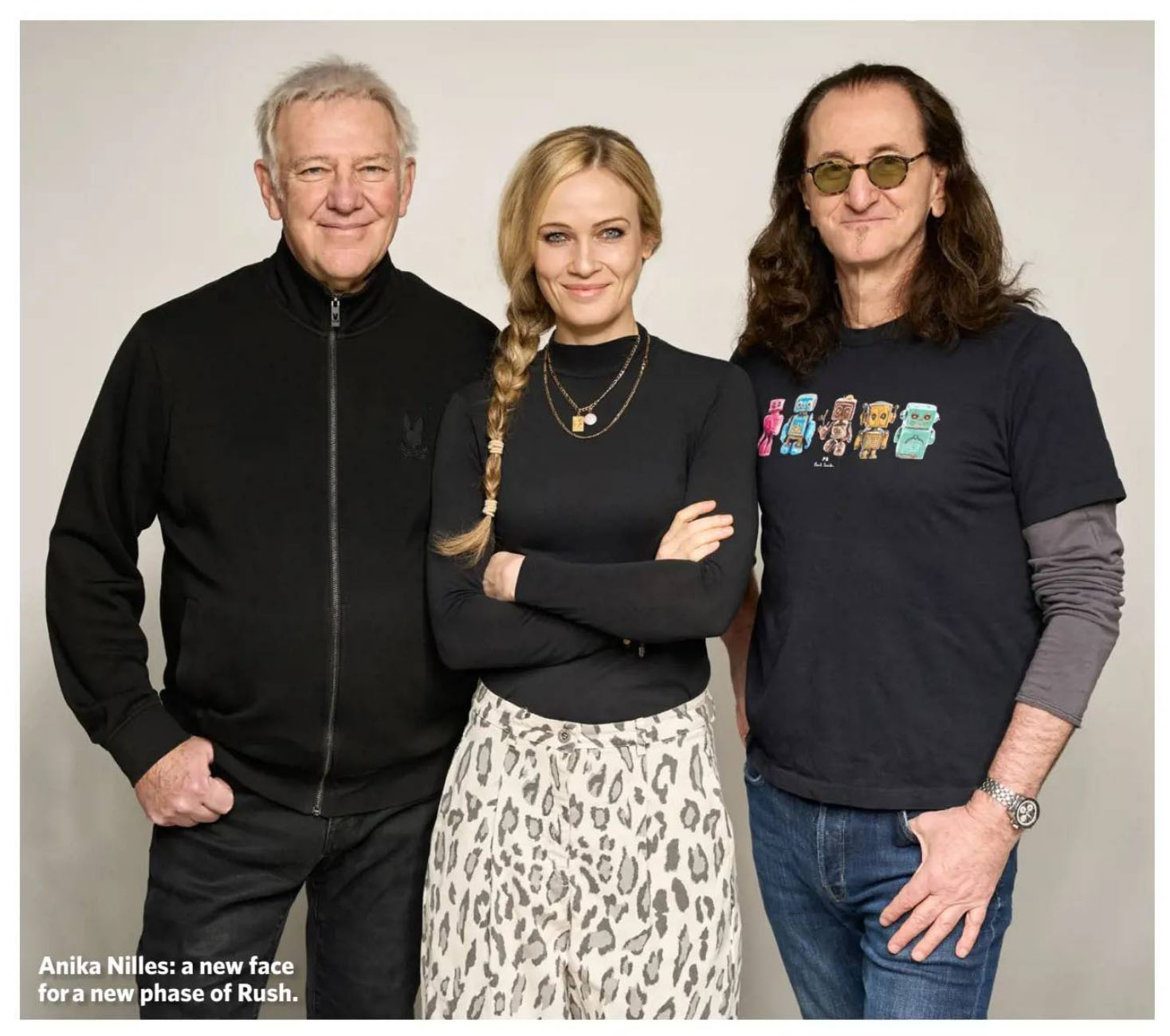
Lifeson: We just saw Anika [Nilles, Rush’s new drummer] in Germany when we were out there doing press, and she was saying how she’s up to speed on the stuff we’ve been rehearsing, and then we told her we’d added a few more songs that she’ll need to learn.
Let’s talk about Anika. She went to Toronto to
play with you both just to see if she might fit,
and there was no concrete plan to put Rush back
together then. On the most basic level, is it just
plain weird to turn around and see someone who
isn’t Neil sitting behind the drum kit?
Lee: Honestly, it’s still fresh. We’ve had four
fairly intense rehearsals. The first one was back in
March [2025], which was an experiment. At that
time we still hadn’t decided to go out. We wanted
to, but if the idea of replacing Neil became too
arduous we would have backed out.
Do you remember what the first song the three of you played together was?
Lee: We'd prepped five songs, but I think it might
have been Limelight. We wouldn’t have wanted
something like YYZ as the first song, though we
did run through it in those sessions. We played
Radio with Anika too. I can’t remember what else
we played. We did Subdivisions, so it might have
been that. But it was a test more than anything
else at that point.
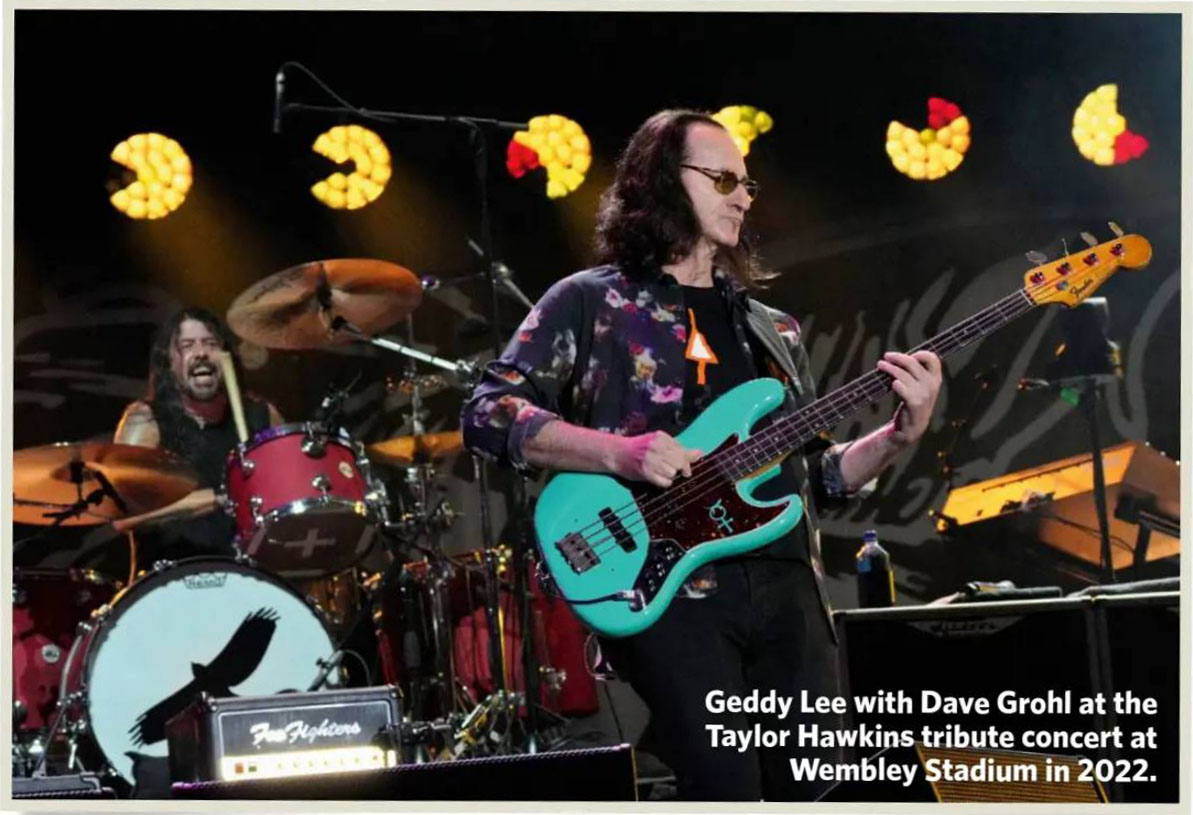
The two of you played with different drummers
for the Taylor Hawkins tribute shows in London
and LA in 2022. Did that help when it came to
working with someone new?
Lee: Yeah, I think so. And thank you to Dave Grohl
for that. Omar Hakim, amazing drummer, did YYZ
with us in London. Grohl, obviously, Chad Smith,
who is so much fun, and then someone like Danny
Carey, monster drummer.
So we knew it would be fun, but it would be a lot
of work. And we wanted to find someone that had
no context. We wanted someone from a different
musical world.
Flashback to the R40 tour. For those final shows,
Geddy had taken out a large swathe of his vintage
bass collection to play throughout the set each
night. Geddy’s bass tech Scully (who also helped
curate and procure Lee’s extensive bass
collection) ferried dozens of different guitars back
and forth per show as the band ran backwards
through some of their ‘greatest hits’.
Lee: Yep, we used twenty-seven basses each night, all vintage with the exception of a couple of my standbys. Poor Scully. He was lean and fit by the end of that tour just from going back and forth at the side of the stage.
And we have Scully to thank for Anika being brought in.
 Lee: Yep. He was working with Jeff Beck, been on the road with him for a few years, and he was on the final tour, which Anika was a part of. When he came back home after that tour, he comes to my house — he still works for me, and we catch up — and he was just raving about this drummer, and he said: “If you’re ever going to go out to do a solo album or whatever, you should think of her. So I researched her, and I love the way she played. I loved her vibe, her story — you know, like playing since she was a kid in Germany, and sort of finding yourself to be a bit of a YouTube sensation and all that, and ending up with Jeff, that was unbelievable. And Al felt the same way.
Was Anika a Rush fan?
Lee: No, not really. Of course, there’s not a drummer alive that didn’t know a song like Tom Sawyer and Neil’s reputation, so the respect was
there. But she was more into Foo Fighters, Goo
Goo Dolls, all those kinds of bands. And she played a world-beat fusion mix thing. But we had a fun call with her, and asked her to come to
Toronto and play with us for five days to see what
might happen.
Did you deliberately choose to have a female
drummer in order to help move the conversation
away from Neil?
Lee: I can’t say that played no part in the
discussion, but when it came down to it, it was
always about her skill and the way she played.
Lifeson: But then we rehearsed for four days, and on the fourth day Ged and I sat down and we
weren’t sure. It wasn’t quite working with the
three of us. We were thinking that maybe we
should continue with someone else, just to see
how that might feel. And on the fifth day, on the
last day that we rehearsed, she took all our
comments about feel, about Neil’s feel and the
way he played, and being very cognisant of the
ability that he had, and bang! She nailed the songs
all day. It was a real ‘Wow!’ moment.
Lee: She suddenly changed gears, just like Al said,
and it all suddenly clicked. She took all that
information, processed it, and applied it. That was
the real turning point. We were playing, and she
was smiling, and we had this eye contact. For a long time I’ve had that drummer/bass player eye contact thing, and that’s so important to me,
and it was so much fun. And I thought, man, if she
comes on this ride, it’s going to be so good for us
because she brings a whole different energy, it’s
wonderful. And yes, part of that is because she’s
female, I can’t ignore that. But mostly, she rose to the occasion, and we said, do you want to hang
around with us? Originally we were only going to
do those summer dates, those six or seven
residencies. This is now a whole other thing.
Anika has had to learn some extremely complex
parts of the Rush catalogue, but how was it for
you two? Alex and I once talked about just how
hard Rush songs are to play, and that’s from
someone who wrote them.
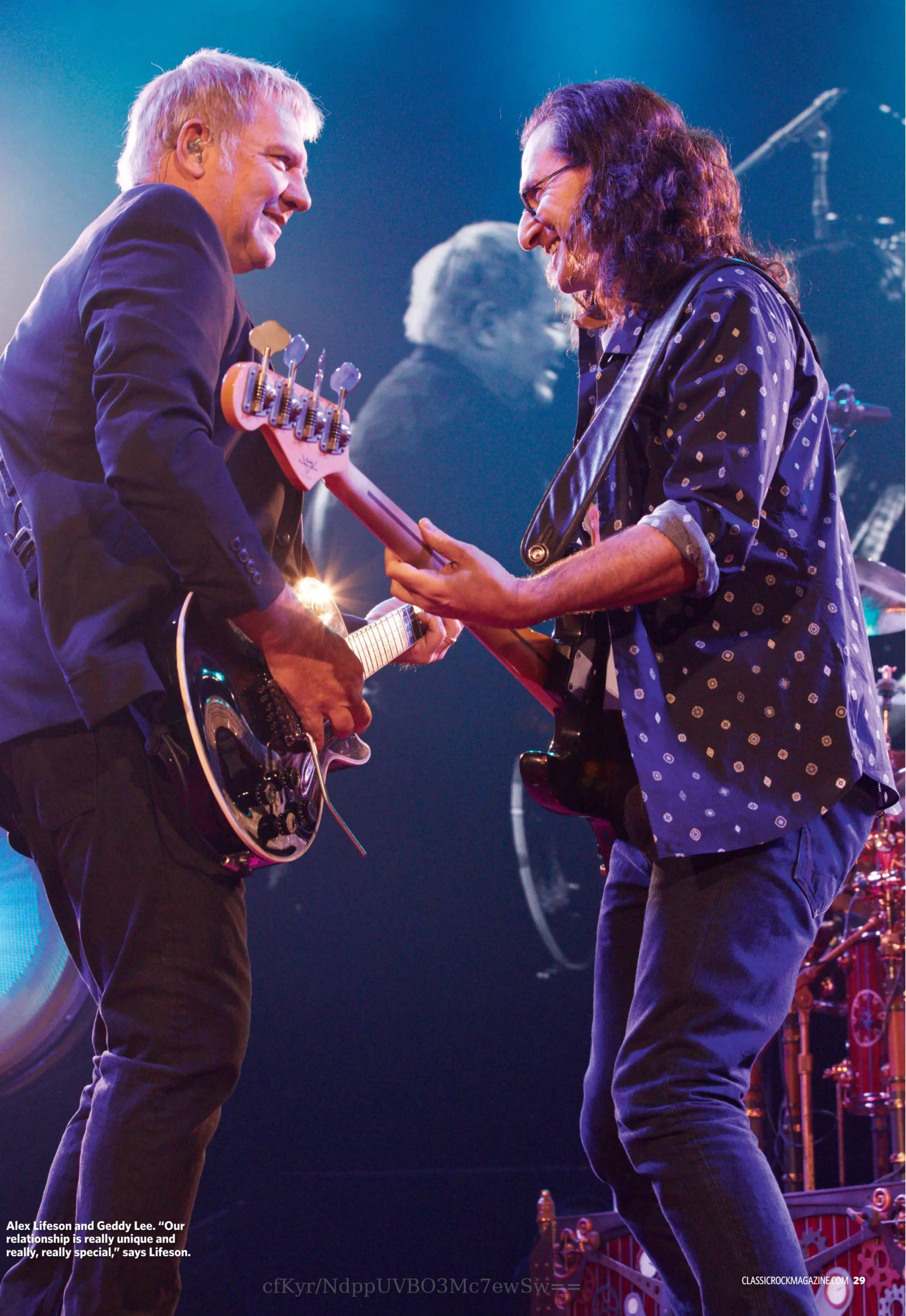 Lee: They’re not all difficult, especially now that
our fingers are back in shape. And we’re catching
up, and so things come to you over time, and
we’ve been doing this since March, even before
Anika started, you know, just in case, and for fun
too. We were tackling all these different songs and
getting our fingers ready.
Lee: They’re not all difficult, especially now that
our fingers are back in shape. And we’re catching
up, and so things come to you over time, and
we’ve been doing this since March, even before
Anika started, you know, just in case, and for fun
too. We were tackling all these different songs and
getting our fingers ready.
For me it was much more important than Al,
because I’ve been writing books, as you know,
and he’s been playing, he hasn’t stopped. So my
fingers were woefully out of shape, I had way
more work to do than he did. I started rehearsing
on a daily basis. A song like Tom Sawyer is never
very far away — that’s never been out of the set — but with these forthcoming shows we’re trying
to cast a wide net, and some of those songs
require a lot of listening, a lot of practice.
Sticking with your past, a lot of your old road
crew are going back out with you on the tour,
not least Lorne ‘Gump’ Wheaton, Neil’s former
drum tech.
Lee: Gump came out of retirement to handle
Anika. It was really quite touching. He’d been out
with Kiss for an age before that. He wanted to do
it, and he’s good for her. I’m sure he drives her
a little crazy, but he’s so good for her in so many
ways, because he knew the cymbals Neil used and
the style of playing and how he hit them, and if
sometimes she’s not sure what the approach of
the song should be, he can call up video stuff and
see how Neil attacked it, and then interpret it in her own way, of course. So it’s really helpful,
very generous of him to come out and sit behind
her like he did with Neil for all
those years.
Anika obviously brings along
her own skill set and approach
to the songs, but are there touchstones that she has to hit, things like the fills on Tom Sawyer, the tom-tom rolls on 2112?
Lee: It’s interesting, you get a chance to look at those songs through her eyes, and it’s funny the things that come naturally to her, like some of the things that we would have thought would have been impossible for her to play, like some of those fills, no problem, really. But other songs that have a more idiosyncratic sense of arrangement, like Subdivisions, for example,
where you have a similar part being played
with different things going on, that was
confusing for her and that was a song that she did not get right away.
Lifeson: And that is a seemingly simple
song for us. That’s been fascinating to watch.
So you get a sense of appreciation for the
way the song is, but you also get a more
acute appreciation for how Neil played. Because
when you see someone else trying to capture
his feel, you realise what kind of player he was,
and the tightness of his attitude, the firmness
in attack as well. With Tom Sawyer, or even
Limelight, you can’t just shuffle through those
songs, you have to be attentive. And, you know,
stand up straight. And that’s sort of where the
feel comes from.
Lee: She’s working very hard to be true to the
essence of what Neil laid down, but of course
there’ll be moments where she can do her thing,
what she’s comfortable with. But it’s a process.
In order to improvise, you have to have a starting
point. And that starting point is to make sure that
song sounds like that song. When a fan has
travelled across America to come see us, you want
them to hear Limelight and go: “Fuck yeah!”
And Anika is not the only addition to the band.
Keyboard player Loren Gold, who you played with
when you sang The Seeker at The Who Hits 50!
gig at Shepherd’s Bush Empire in London in
2014, is going out on the tour too.
 Lee: Yep, he played with The Who for twelve years,
played with Chicago too. Cool guy, good keyboard
player, and he can sing too. We sort of talked
about that — if we’re going to get a keyboardist,
can we get someone that can sing and add to the
vocals too? I thought that would bring another
dimension to what we do. Just as important, he’s
a sweetheart and funny. And to be honest, Anika
was the only consideration for drums, and Loren
was really the only consideration for the
keyboards. We had one other person we were
looking at in Canada, but when Loren came up to
play with us for a few days and was singing along
with the songs and playing the parts, that was it.
I’m not sure what we would have done had they
both turned us down.
Lee: Yep, he played with The Who for twelve years,
played with Chicago too. Cool guy, good keyboard
player, and he can sing too. We sort of talked
about that — if we’re going to get a keyboardist,
can we get someone that can sing and add to the
vocals too? I thought that would bring another
dimension to what we do. Just as important, he’s
a sweetheart and funny. And to be honest, Anika
was the only consideration for drums, and Loren
was really the only consideration for the
keyboards. We had one other person we were
looking at in Canada, but when Loren came up to
play with us for a few days and was singing along
with the songs and playing the parts, that was it.
I’m not sure what we would have done had they
both turned us down.
Was there ever a moment where you weren’t
going to call this iteration of the band Rush?
Lee: That did come up, what do you fucking call it?
When the band ended, we said it’s only Rush with
Neil in it. Which of course is true. Rush as most
people know it. But, you know, over five gigs we
will be playing forty Rush songs. So what the fuck
should we call it, Iron Maiden?
They’re still going, you know.
Lee: We were twisting ourselves into a pretzel to
try to avoid using the name that we have had for
fifty years, and even before Neil came. And since
1969, it’s not my name, it was Al’s name. Well,
him and John [Rutsey, Rush’s drummer before
Peart] and John’s brother, Phil. But, you know,
it just seems silly to go on as Lee And Lifeson
Present The Music Of... Let’s cut to the chase, shall
we? Let’s just be who we are and have been for
over fifty years.
Talking of your legacy, the latest deluxe edition
of Grace Under Pressure comes with one disc that’s
an entire remix of the album by your long-
standing producer Terry Brown, who was let go
by the band before you went into the studio. He’s
done a great job. Whose idea was it to get Terry back on board to work on what was a tricky
album to make at the time?
Lifeson: That was Terry’s decision. He called us
up, he wanted to make it happen.
Lee: He said how do you guys feel about it?
Would you support it if I remixed it, you know,
like a courtesy, I guess. And I just said sure.
Regardless of what happened, he’s a great
engineer and a great producer.
Lifeson: I think it was a thing for him to do. You
know, finally get his hands on the album he didn’t
get to work on. I thought he did a terrific job, too,
it sounds really good.
 It’s early May 2002 in the Cabbagetown neighbourhood of Toronto, and the basement meeting room of SRO management’s offices is
cold even at this time of year. On the walls hang
various framed gold discs, a large unframed
black-and-white portrait of Rush - taken some
time towards the end of the 80s, judging by the
band’s haircuts and Peart’s bandanna. Against one
wall are two of the giant dice from the Roll The Bones stage set, and directly above
the low glass table at which we’re
seated is the original artwork for the
cover of the Power Windows album
- the gawky teenager with a remote
control held loosely in one hand.
It’s early May 2002 in the Cabbagetown neighbourhood of Toronto, and the basement meeting room of SRO management’s offices is
cold even at this time of year. On the walls hang
various framed gold discs, a large unframed
black-and-white portrait of Rush - taken some
time towards the end of the 80s, judging by the
band’s haircuts and Peart’s bandanna. Against one
wall are two of the giant dice from the Roll The Bones stage set, and directly above
the low glass table at which we’re
seated is the original artwork for the
cover of the Power Windows album
- the gawky teenager with a remote
control held loosely in one hand.
We were there to talk about the
Vapor Trails album, the band’s first
record after a five-year hiatus after
Neil lost both his daughter and his wife
in less than a year. A complete reset for
the band that would ultimately result
in a period in the band’s life that Geddy
would later call his happiest days with
Rush. Another hiatus, another reset.
That was a tragedy, this is a whole
other set of challenges.
Lee: This is completely different, and for so
many reasons.
Lifeson: The band essentially ended when Neil
retired after R40, and we were in that confused
state of emotions — frustrated that it ended, yet
understanding what Neil needed. It felt like
unfinished business, in a weird way, but it
was over.
Lee: Whereas Vapor Trails through that whole
time, even though we’d put any band business out
of our minds, there was a lingering ‘will we or
won’t we’ get back together again? Is this a break,
or is this the end? But after R40 there was no
question. It was over for us.
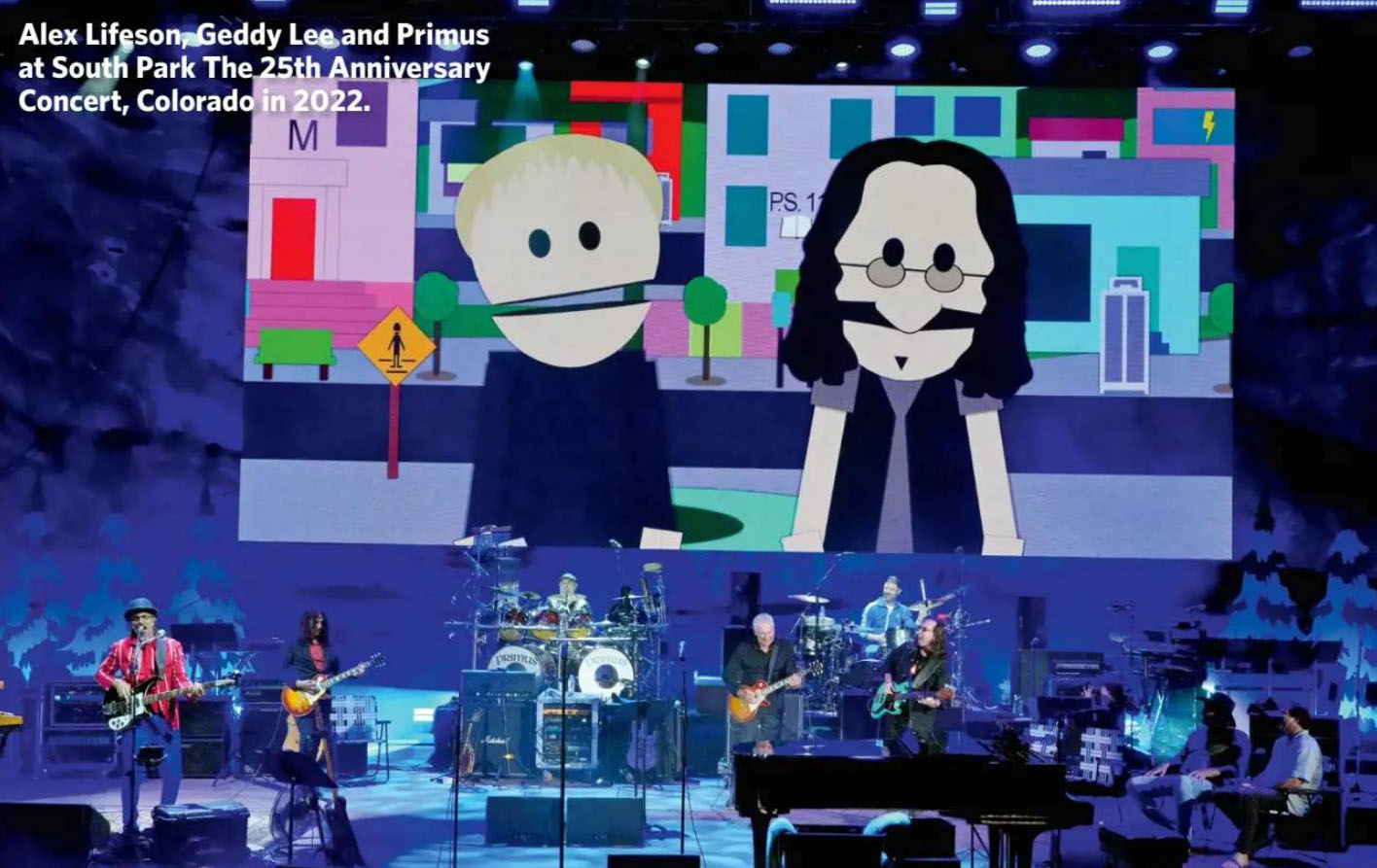
There were the landmark shows: Red Rocks, the
South Park: The 25th Anniversary Concert in
2022, the two Taylor Hawkins shows later that
year. You always hang out together, but did you
play together too, even just jamming?
Lifeson: Once in a while I would go over to Ged’s
and we would fuck around, but it was mostly
coffee, and we would talk, just catch up. And then
Les Claypool [Primus bassist/vocalist] contacted
us because they wanted to surprise Matt Stone
for that anniversary show, and that gave us
something to aim for.
I spoke to you after the soundcheck at Wembley
Stadium the day before the first Taylor Hawkins
tribute show, and you were both absolutely elated
at how the rehearsals had gone. Even Paul
McCartney was badgering you to get the band
back on the road. The show itself was incredible,
and it was the first time in a long time that
I thought you might re-form. And then the
wheels came off. What happened?
 Lifeson: It was. It was going forward, and I was
excited about it and the prospect of doing it, but
I had some reservations. I just kind of submerged
them for maybe a month or two after we got back.
And then I started thinking about it, and I had
other projects going on and other plans, and I just
didn’t know if I wanted to go through the whole
thing of going on a road and being, you know,
trapped in the prison that a hotel room can be
day after day.
Lifeson: It was. It was going forward, and I was
excited about it and the prospect of doing it, but
I had some reservations. I just kind of submerged
them for maybe a month or two after we got back.
And then I started thinking about it, and I had
other projects going on and other plans, and I just
didn’t know if I wanted to go through the whole
thing of going on a road and being, you know,
trapped in the prison that a hotel room can be
day after day.
Lee: [Looking around the luxurious hotel suite]
Oh yeah, sure looks like a prison.
Lifeson: You know what I mean. I just felt trapped.
But later, we started working on some other
projects together, things like the documentary
and getting together to play more. These jamming
sessions became more consistent, and then we
started playing Rush songs, and it was really fun
to play those songs again after all that time.
How did it sound?
Lifeson: Oh, it was terrible.
Lee: Let’s be fair, they were awful.
Lifeson: As I’d said to you, you realise how
difficult our songs are. But slowly, and with
the help of muscle memory, it began to come
back. Though it does mean keeping my fingers
moving consistently.
It’ll be a wrench some nights to turn around and
realise that Neil isn’t on stage with you.
Lee: Without Neil... I’ll be frank. There are some
songs you play where it kind of hits you, it’s bad,
and it feels weird. And it’s appropriate that that
happens. You know what I mean? If we just
picked up and went on without feeling any tug
of anything, that would be absurd, that would
be a whole other thing. And there’ll be moments
in both sets where we’ll pay tribute to him.
We’re working hard on that, making sure that
it’s appropriate.
Even the artwork on the tour poster, the three
birds on the wire, and one flying away, that gave
me real pause.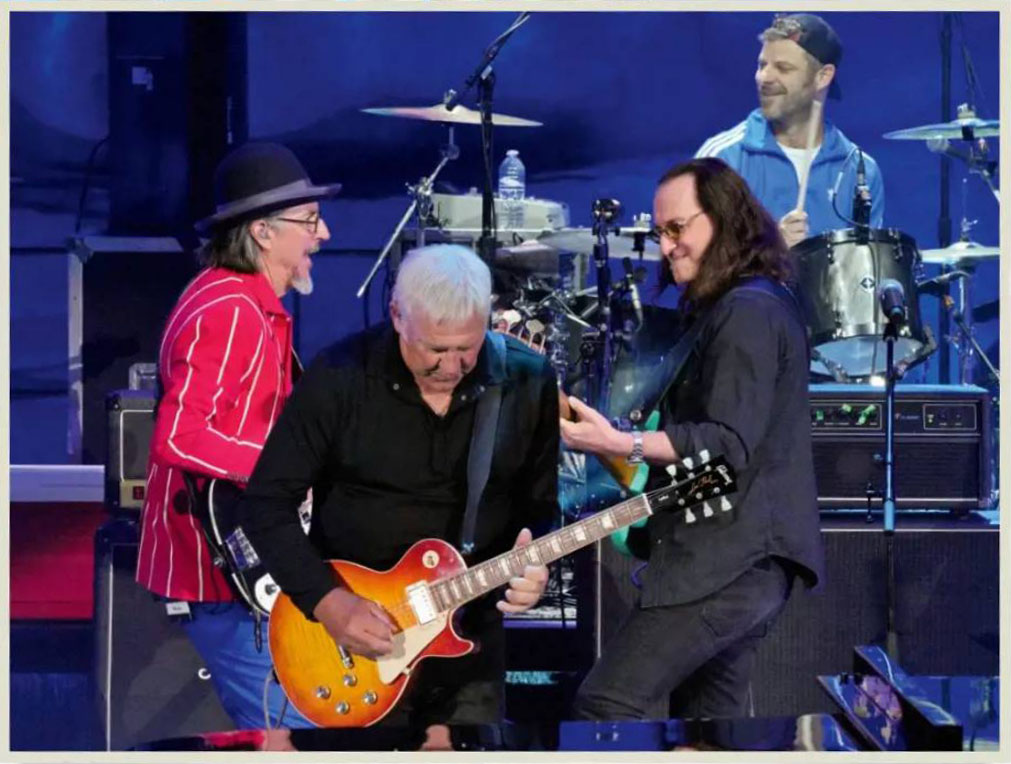 Lee: Let’s not pretend. The emotional and logistical aspect of making this kind of decision is extremely difficult. Yes, there was nothing about this decision that came easily, except when Al looks at me, and I look at him in the studio and we go why the fuck shouldn’t we do this? The laughter that we have in rehearsals, the fun that we poke at each other when we both forget a part, or when my fingers are not going fast enough, and I’m fucking pissed off when he plays a solo for a different song.
Really?
Lifeson: Yeah, that has happened, a few times.
You were occasionally writing stuff during those weekly jam sessions. Will that come to anything?
Lee: I do still have those jam tapes.
Lifeson: You do?
Lee: So when this is all said and done, maybe we'll go back and try to write something if we’re fired up enough. Or maybe not, maybe we’ll just go away.
On a more personal note, your families and
partners spent years of you being away on the
road. How have they taken the news that you’re
coming out of retirement and disappearing for
months at a time again?
Lee: It can be hard on wives of musicians on a number of levels. You’ve got this life together,
and then you’re the one that splits. And then
they’re the ones that have to say what am I all
about right now? So staying productive and happy
becomes more pressure-filled for them, that’s
true. Initially we said, okay, we’ll take the wives
on the whole tour, but that was when it was seven
cities and one summer. But a whole tour, that’s
not going to fly. Neither of them will want to do
that. So it’s a big adjustment for everybody on
both sides.
 Al, I don’t mean to put you on the spot, but when
I interviewed you for the R50 box set you told me,
and I’m paraphrasing: “For forty years, Rush
included Neil, and I don’t think putting some
new version together would have the same
magic”, and “I guess I’d rather be remembered
for our legacy than returning as the top Rush
tribute band”. What happened?
Al, I don’t mean to put you on the spot, but when
I interviewed you for the R50 box set you told me,
and I’m paraphrasing: “For forty years, Rush
included Neil, and I don’t think putting some
new version together would have the same
magic”, and “I guess I’d rather be remembered
for our legacy than returning as the top Rush
tribute band”. What happened?
Lifeson: I felt like that was Rush, but I have the
right to change my mind. I realised that I love
playing. You know, working on those other
projects, for me personally, it was cathartic. And I just felt like I had something, you know, a renewed a desire to play again. I love playing. I just love playing. And then as this developed, the prospect of really playing challenging music and being with this guy. Our relationship is really unique and really, really special.
At points it did seem very off again and then on
again? That must have caused some frustrations.
Lee: Of course. When we started getting serious,
we were jamming, we’re having fun, and Al said
he wanted to do it again. And he knew I wanted to do it.
Were you pushing for it?
Lee: I wasn’t really pushing. But after the last
time when Al sort of said let’s do it and then
backed away... When I discovered that he really
was serious, I said if you’re serious, then we have
to do it. Otherwise I don’t want to talk about it
again. We’re either going to do it, or let’s just not
and be happy with that decision.
We'll finish with a very 101 question. You haven’t
been out on tour for such a long time as a band, as
Rush. Is there anything that you are particularly
looking forward to — or not — when you set foot
on those stages?
Lifeson: Well there’s only one thing you look
forward to, and that’s playing. I’m looking
forward to that feeling of being on stage and
playing and getting lost in the song and hitting
every note correctly. There’s nothing else about
touring that’s attractive.
Lee: I’ve got one goal, and that’s to be better than I was ten years ago. Which is tough. It’s a real challenge.
Lifeson: But that’s the goal. And honestly, that’s
what is driving me in this whole thing. We’re at
this stage now where I’ve committed to it. And all
I want at the end of the day is for us to be Rush and to be amazing.
Grace Under Pressure
Interview by Philip Dethlefs
Anika Nilles talks about stepping into the glare of the Rush spotlight, and her life growing up with music.
When it was announced last
year that German drummer
Anika Nilles was chosen to
take the place of (not
replace) the late, great Neil
Peart in one of the biggest and most musically
technical bands in the world, many rock fans may
have wondered: “Anika who?” But don’t let her
relatively low profile in the rock world lead you to
underestimate her. Soon that profile will skyrocket,
and deservedly so. Drummer, composer,
bandleader, musical educator, she is more than
qualified and more than capable. That she has
toured with Jeff Beck — whose other drummers
include such giants as Simon Phillips and Vinnie
Colaiuta — should be enough in itself. Pressure?
What pressure? Many will think she’s fortunate to
have hooked up with Rush; others will reckon
Rush are fortunate to have hooked up with her.
 Have you previously experienced the level
of attention you’re getting now?
Have you previously experienced the level
of attention you’re getting now?
Yes, but before it was all within the drum
community. Not so much mainstream or
general music press, more drum community
publications and trade magazines.
And how does it feel? A new, exciting experience?
It’s definitely a whole different level than before.
How did it all happen?
I was on tour with Jeff [Beck], and Jeff’s guitar
tech Scully was there as well. Scully is also Geddy’s
bass tech, and that was basically the connection.
Scully apparently told Geddy about me and then
got us in touch.
What was your first thought?
A call like that is definitely something you need to
process first. Then I got an invitation to Canada.
Initially it was about meeting to see whether it
would work for the guys to go back on stage, and
whether this line-up would work. Of course, it was
overwhelming at first to be playing with the two of
them in the studio in such a small setting.
How did you prepare?
I had a few songs prepared before I flew over, and
we played those. But during the session we also
talked a lot about Neil — about his view on music
and drumming. We spoke a great deal about the
feel of the songs. The most important point is
simply to capture the feeling — that it feels right
for the two of them to play their music again. And
ultimately it will feel right for the fans as well. We
talked about that a lot. The first session was really
about getting to know each other and seeing how
we function together.
May I ask which songs you played together first?
Unfortunately I can’t leak any songs [laughs].
What will go through your mind in the days
leading up to the first concert in Los Angeles — or
maybe in the minutes just before — in June?
I hope I can stay focused. I try not to put too much pressure on myself. That’s very important — just to have fun as well. Of course, it’s a big deal, and
there’s a certain level of expectation. But for me
it’s very important to stay focused and to enjoy it,
not to approach it too rigidly.
Do you get stage fright before concerts?
In the past I actually had a big issue with stage fright, and I worked on it a lot. I’ve developed
enough techniques and tools that I can rely on. And
if the nerves really start to take over, I definitely
know how to counteract that.
What was your relationship with Rush and their
music before this came about? Were you very
familiar with their catalogue?
As a drummer I was familiar with Neil’s work, of
course, especially the song Tom Sawyer. That’s a classic. It’s played a lot in the drum community,
as a play-along or even in exams. But I never
really listened to Rush, even though I grew up with
rock and progressive music. I listened to a lot of
rock, but somehow never Rush. All the songs I’m
learning now are new to me. I’m basically starting
from scratch.
What is the biggest challenge for you?
The biggest challenge is actually really capturing
the right feel. In these songs, it’s less about what I play, whether it’s true to the original or whether
there’s room for improvisation. That comes
second. First and foremost it’s about capturing the
right feel. That also means immersing myself to
some extent in Neil’s way of thinking and his
playing feel, which is a huge part of this music. Neil
is simply part of this music, and you can’t ignore
that or bring your own ego into it. You have to
approach it with respect and a lot of sensitivity.
Capturing the feel also means playing things
differently than I might normally play them —
playing them more the way Neil played them, to
give the guys their familiar feeling for the song.
That’s really the biggest challenge: figuring out
what that is in each individual song — what creates
that feeling so that the two of them feel
comfortable? What do they need? What makes the
song the song, so that it sounds the way it does?
That’s where my focus lies as I work my way
through the setlist, figuring out what the song
needs and what defines it.
How much of your time per week is currently
going into Rush — how intense is the preparation?
Since January I’ve been preparing full-time only.
That means five to six hours of pure playing
every day, completely focused on it. Before that
it was more of a mix because I still had other
commitments. My band had just released an
album, we were in the middle of a tour, and
I had to balance everything a bit. But now,
about half a year before the tour, I’ve stepped
away from everything else and am focusing
completely on the preparation.
For someone who isn’t a drummer, can you
describe roughly what defined Neil’s playing?
 His playing was very energetic, and I really like
that. That’s something I feel very comfortable with. I also love playing in a very energetic way. That’s
the first thing that comes to mind, and something
I really appreciate about his playing. He also had an
incredible range of tonal colors. He had a very
melodic approach to drumming and used a wide
variety of sounds to achieve that. That set him
apart and made him stand out to many drummers,
for whom he was - and still is — a role model.
His playing was very energetic, and I really like
that. That’s something I feel very comfortable with. I also love playing in a very energetic way. That’s
the first thing that comes to mind, and something
I really appreciate about his playing. He also had an
incredible range of tonal colors. He had a very
melodic approach to drumming and used a wide
variety of sounds to achieve that. That set him
apart and made him stand out to many drummers,
for whom he was - and still is — a role model.
He had a very distinctive way of playing the ride
cymbal. When you listen to the music, that cymbal
always stands out prominently. It has its own feel,
which is also important for the guys and for that
sense of feel I mentioned earlier. He had a very distinctive snare sound as well. There are certain
signature sounds that come directly from his
playing — not from the equipment, but from him.
You recognise him immediately. Adapting to his
way of playing is a challenge.
Even non-musicians can tell that Rush’s music is
on another level. Many of these songs feel almost
scientific in their precision, don’t they?
Yes, you could say that. It’s a very creative way of
writing songs — very creative and very authentic. If
you know the guys, you can tell how authentic it is.
It’s not something artificially pieced together, it
comes from within them. Of course, it’s also highly
complex. And within that complexity, the
drumming — the way the parts are
composed — almost feels like a work in its
own right. It’s all interwoven with the song.
Neil rarely repeated himself. He kept
bringing something new into the song.
Even if a section repeated in terms of
songwriting, his drumming the second
time was different from the first. That
makes it exciting and is part of what gives
the songs their identity. At the same time,
it’s a challenge to remember all those details,
because they’re important. It’s a composition; you
can’t just ignore certain parts, they’re all essential
and have to be played. That’s challenging.
How are Geddy and Alex as people, as colleagues?
They are incredibly funny people. Very human,
very warm, very welcoming. I felt comfortable
right away. And that’s extremely important
when you’re working together — that it works
on that level. Thankfully it clicked with the two
of them immediately.
I really enjoy watching them play, because
they do it with such unbelievable joy. They’re
simply having fun, yet at the same time they’re
completely focused when it comes to the details.
They’re deeply immersed in the details of their music, they know every note and every hit by heart. They’re fully aware of everything. And their energy — both in the way they interact with each
other and in the sheer force of their playing — is
fantastic to witness. It’s incredibly fun.
Did you ever want to become a rock star, or was that never your intention?
No. It never turned out the way I imagined it anyway. You can plan a career, and then completely different things happen. My entry was actually quite unusual — through the drum community. That happened because I posted YouTube videos with my own compositions. That wasn’t planned either. A friend of mine wanted to test his camera, and we said: “Come on, let’s make
a drum video.” That was fifteen years ago, before
Instagram and all that. It was a completely
different time. And that’s how this project started:
“Let’s do drum videos.” It kept gaining
momentum. I made my own album, founded
a band, and the videos reached millions of views.
And, funnily enough, Jeff [Beck] saw those videos.
Before that I had already played for bigger acts
in Germany and toured, but playing for others was
never really my thing. I was always more focused
on my own compositions and being an independent
artist. Of course, playing for Jeff was a huge deal
— performing for a top artist on that level. But all
of that really came about through the videos.
You said playing for others was never really your
thing. What makes the difference with Rush?
I never rule out playing for others. If I find it
interesting and it fits me, I’m happy to do it. Some
offers were a good fit, others weren’t. But Rush fits
me like a glove in terms of how I feel musically.
I grew up with rock and progressive music, that’s
where I come from. Then at some point I drifted
more into jazz and fusion. Now it feels a bit like
coming home — back to where I originally came
from, but with everything I’ve experienced,
played, practised and learned in between. It almost
feels like everything led to this. And first of all, it
was Rush — hello! But beyond that, it’s truly
something I can see myself in, a world I find
exciting and that I’m genuinely interested in.
What does it mean to you as a German drummer
to play for a world-famous band? Do you also see
yourself as a role model for young women?
I do think I’ve become a role model for many
people. Over the past ten years, with everything
that has happened, I’ve learned that I’ve sort of
grown into that role. I don’t do it consciously,
I make my decisions based on what’s in front
of me at the time. But I believe it’s important,
as a woman on drums — which is still
underrepresented — to have role models. To be
able to say: “Look, she’s playing in this band,
she’s playing for this act.” We’re here. We can
fulfill these roles just as much as men can. That’s
important. When I was growing up, that didn’t
really exist. Fortunately I had a lot of support from
my parents and family. But I know many girls
don’t have that support, and have to fight their
way through on their own — for very different
reasons. For them it’s even more important to
have a role model they can look up to. And I am
aware of that responsibility.
What will it mean to you to go to Germany, your
home country, with Rush and perform there,
where there will surely be many people in the
audience who have known you for a long time?
It’s always something special to play in your home
country with a big act. It was special with Jeff, and
it will be special again with Rush. I think
the guys haven’t been here in quite a long
time either, so it will be special for them as
well. And for me it’s wonderful to connect
with the German Rush fans. I’m really
looking forward to that.
Which Rush songs do you like the most?
I listened through the entire catalogue
before I started practising specific songs.
I like the songs where things really kick in. Natural
Science, for example, is one I like a lot — very
energetic, many parts, also odd time signatures.
It’s a colourful mix of everything. I also really like
very melodic songs like Time Stand Still. That’s one
of my favourites. There are quite a few songs. But
I’m into that combination: melodic, and then full
energy, full power again.
You mentioned that you’re rehearsing up to forty
songs to be able to vary the setlist. Those are
going to be intense weeks.
Yes, exactly.
When do the full-time rehearsals begin?
I believe full-time rehearsals start in mid-April.
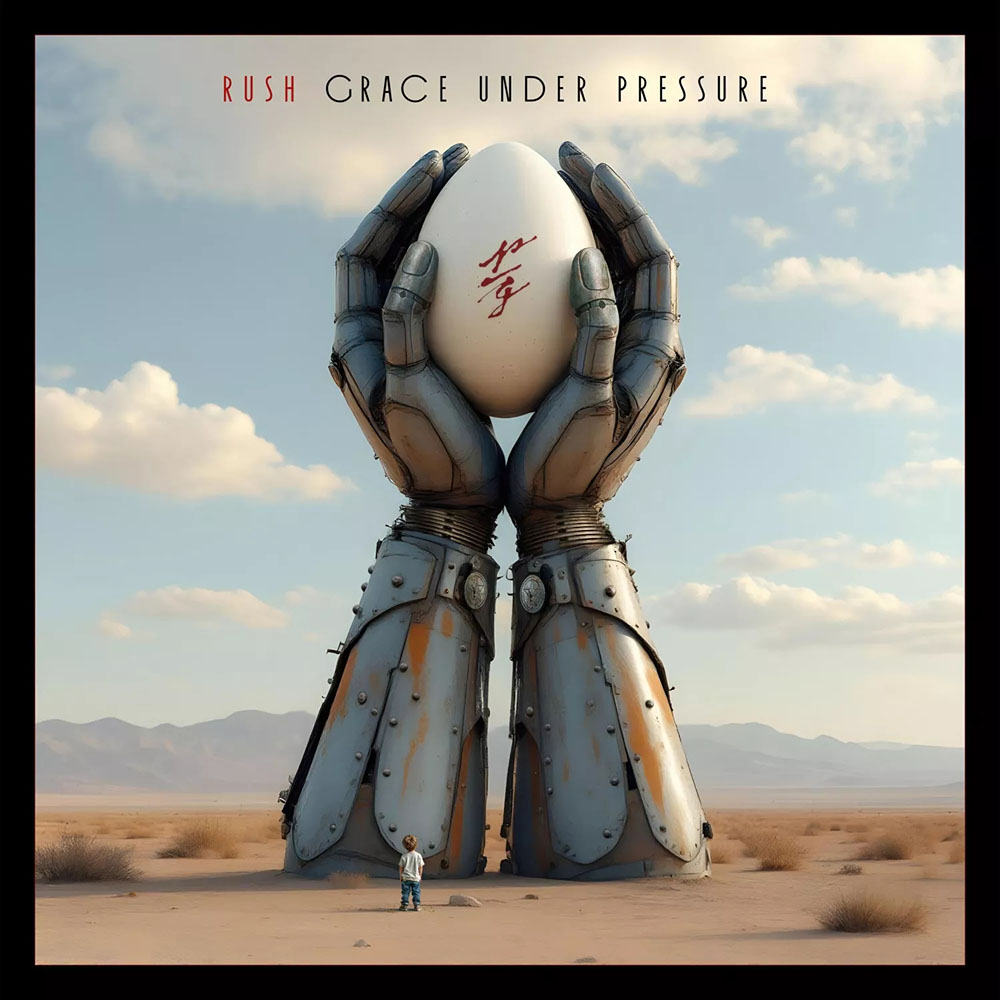
Grace Under Pressure Box Set Review
by Dave Everley
The arbiters of cool finally decided to let Rush through their hallowed portals in the early 2010s,
thanks to the efforts of Dave
Grohl, Jack Black and other
celeb super-fans. Yet the
platonic vision of the band they
had in mind was the kimono-
clad 2112 vintage. By contrast,
the trio's shiny-suited,
be-mulleted 80s ‘synth era’
incarnation is still awaiting
proper rehabilitation, more's
the pity.
This physically weighty super-
deluxe edition of their ninth
album won't rectify that, but it is
a reminder of what a fantastic
transformation it was. While
1982's Signals completely did
away with sidelong guitar
suites about spaceships and
dystopian regimes, this follow-
up doubled down on new studio
technology and Police-adjacent
‘white reggae’.
The years have given Grace
Under Pressure a new currency,
both sonically (its of-the-
moment sounds have come into
fashion again) and lyrically -
Distant Early Warning plugs into
fears of global nuclear conflict,
while Afterimage has extra
poignancy following the death
of drummer/lyricist Neil Peart.
The physical version goes
some way to justifying its £300-
plus price tag with a new remix
of the album by longtime
producer Terry Brown, a complete live set recorded in
Toronto on the Grace Under
Pressure tour (on CD/vinyl and
DVD), plus liner notes from
Geddy Lee (a welcome first for
a Rush reissue), and the now-
customary Hugh Syme
‘reimagining’ of the original sleeve
(not so welcome). An expensive
luxury, but there's no denying
the quality.

-| Click HERE for more Rush Biographies and Articles |-